


First Crossing
100 Nautical Miles to Huahine
The bay of Moorea was perfectly calm. Not a breath of wind disturbed the water. Great conditions for doing some final sail checks, not so great when you're planning your first 100-nautical-mile overnight passage. Still, the forecast promised a steady 15 knots from the east throughout the night. Since the wind was expected to weaken over the following days, we decided this was our window. Tonight, we would leave.
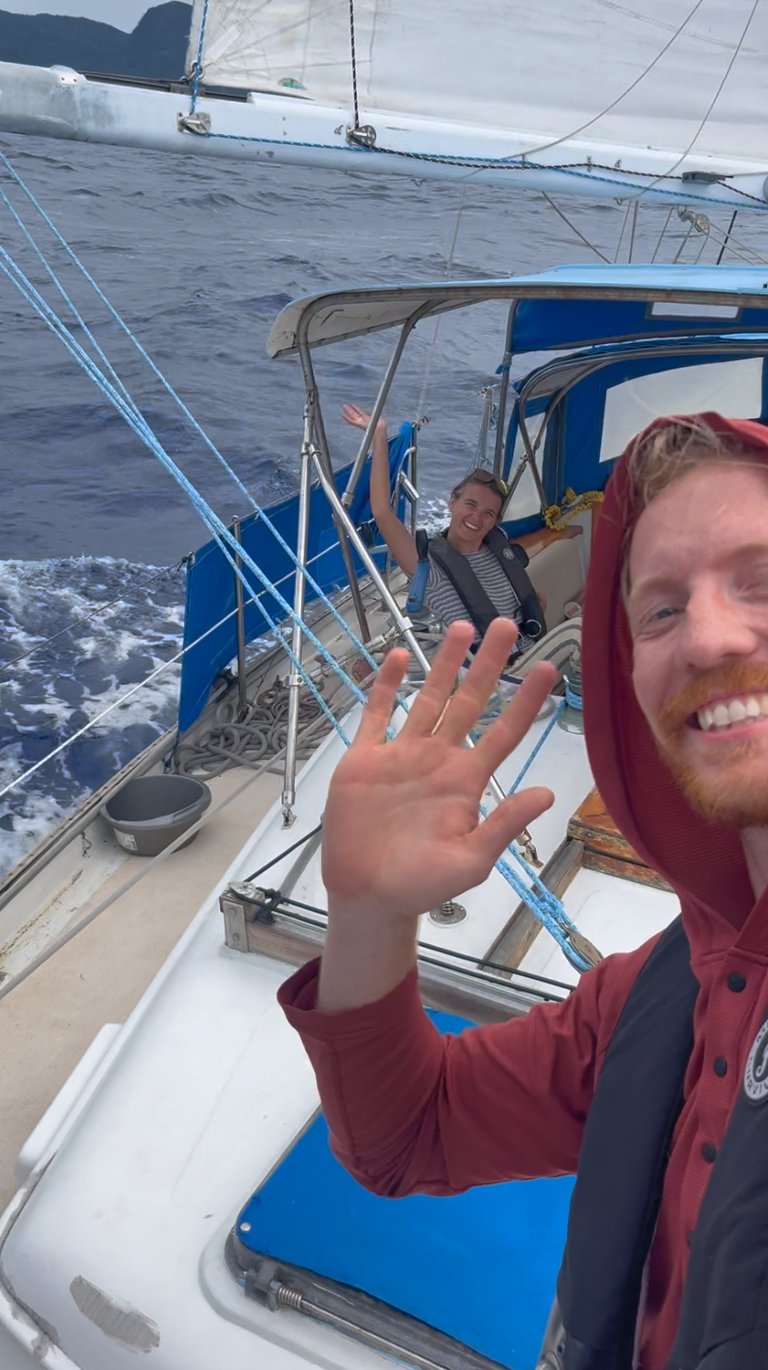
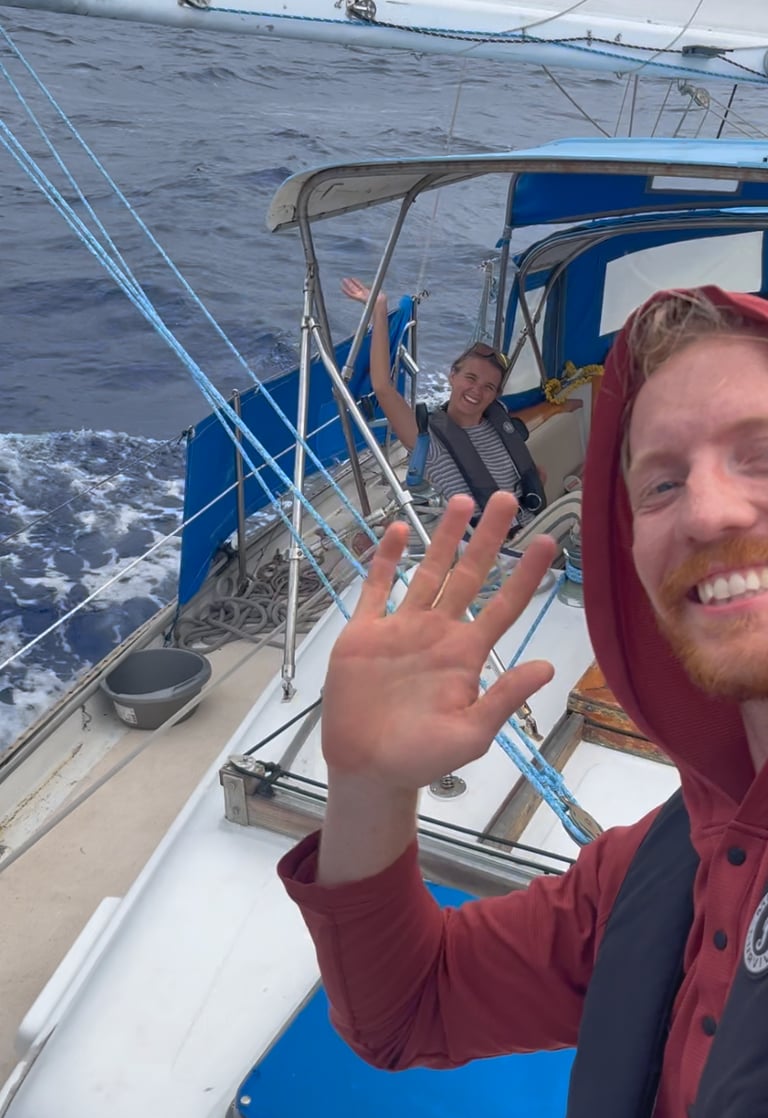
The afternoon was filled with preparations. Snacks were packed, loose gear was stowed away, safety lines were rigged around the boat, and life jackets were brought on deck. By 4:30 p.m., everything was ready. As we slipped out of the harbor, we were both nervous. This would be our first longer sailing trip together and our first overnight passage. Exciting? Absolutely. Slightly terrifying? Also absolutely.
Outside the reef, there was still very little wind. The waves, however, had clearly not received the memo. They rolled the boat around relentlessly while we prepared the sails. That's when my stomach decided it had opinions. Just after setting sail, while we were still motoring, I started feeling worse and worse. A few minutes later I was leaning over the side feeding the fish. What a fantastic start.
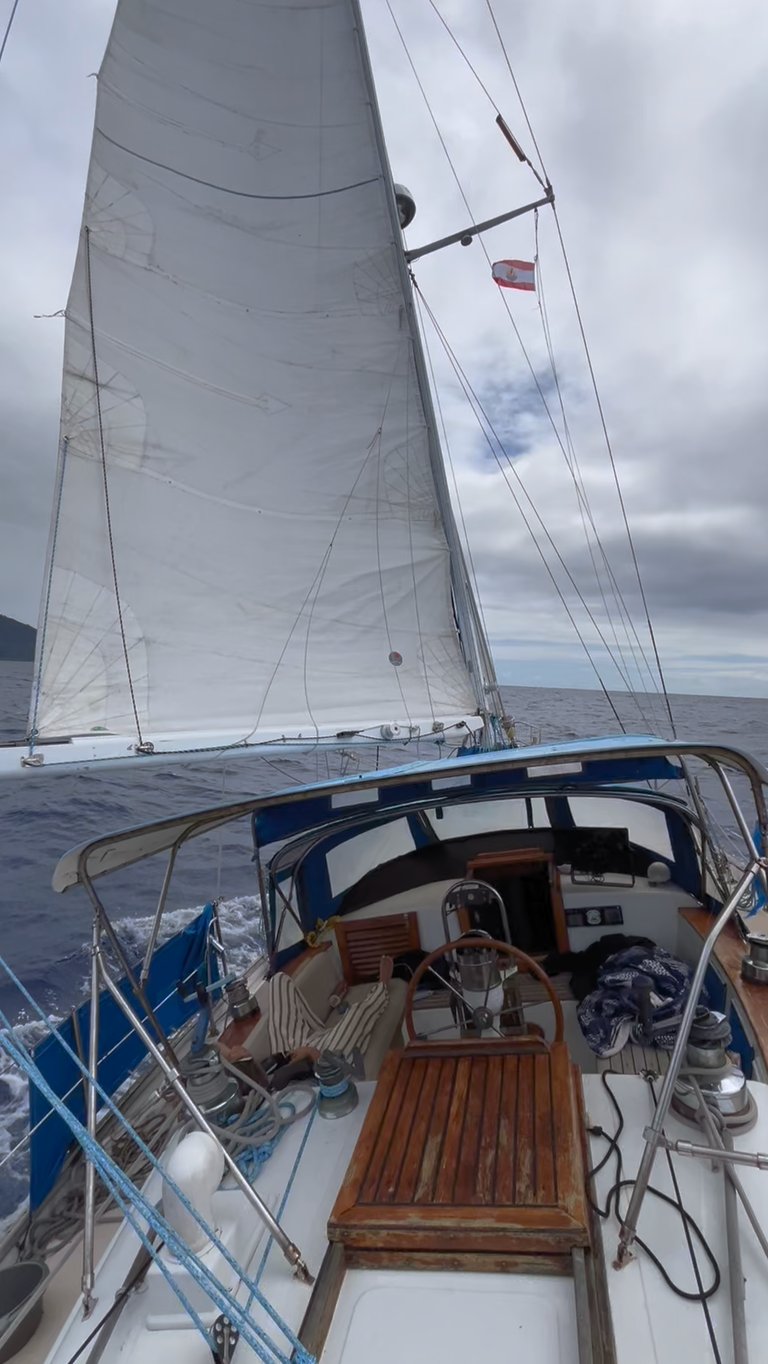
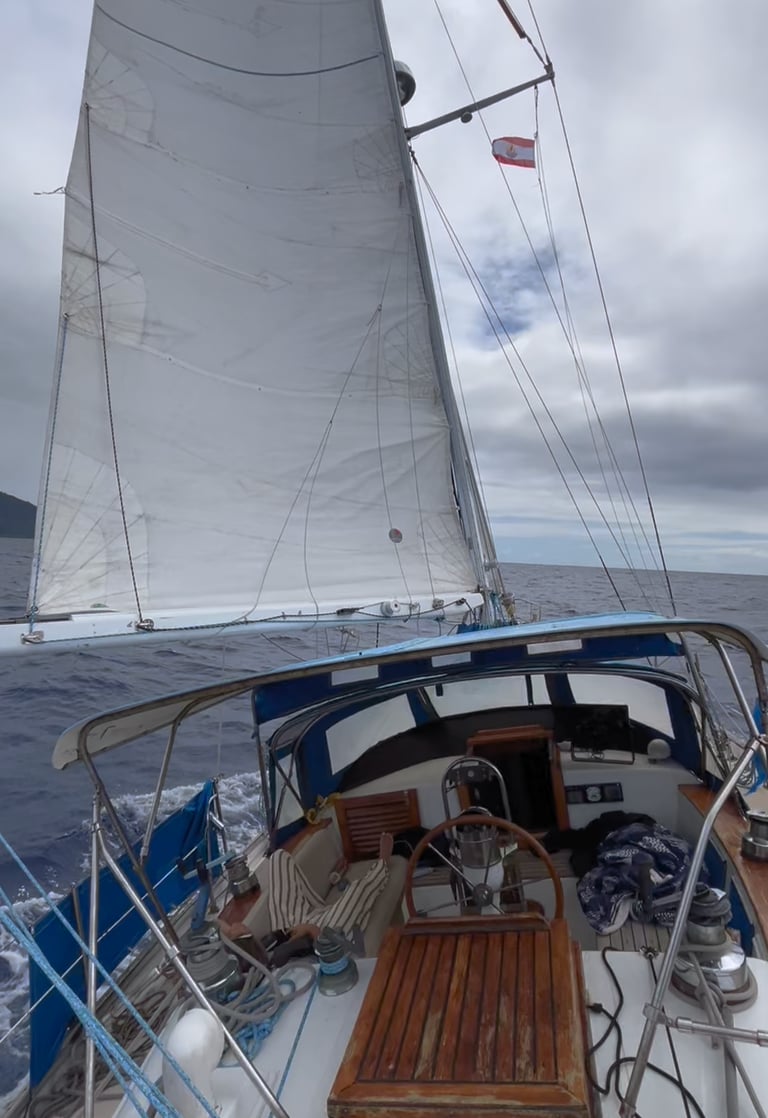
Alex was understandably concerned. Even if the conditions turned out perfect, we still had twelve hours of overnight sailing ahead of us. Our original plan had been to round the south side of Moorea, but between the lack of wind and the waves pushing us northward, we quickly changed plans and headed toward Huahine via the northern route instead. For a while, things were not exactly glamorous. My stomach was in open rebellion, the boat was being thrown around by the swell, and at times we had to support the sails with the engine because we were making almost no progress. We weren't really sailing so much as being tossed around in the general direction of our destination. But then, just as Tahiti and Moorea started disappearing behind us and darkness settled in, everything changed. The wind arrived. Not 15 knots. More like 20 knots and higher in the gusts. Time to reef. Alex headed forward while I kept the boat pointed into the wind. It may not have been the prettiest reefing job ever performed in the history of sailing, but it worked. The boat settled down, we felt far more comfortable, and suddenly it felt like we were really underway. Course set: Huahine.
For the first hour, Alex hand-steered us through the waves before we decided it was finally time to trust the autopilot. To our great relief, it worked perfectly. The wind stayed remarkably steady, and with the autopilot happily steering, we were free to enjoy one of the greatest rewards of offshore sailing: the night sky. The stars were incredible. The Milky Way stretched across the sky in brilliant detail, and with Tahiti and Moorea fading into the darkness behind us, only the stars and the half moon illuminated our path.
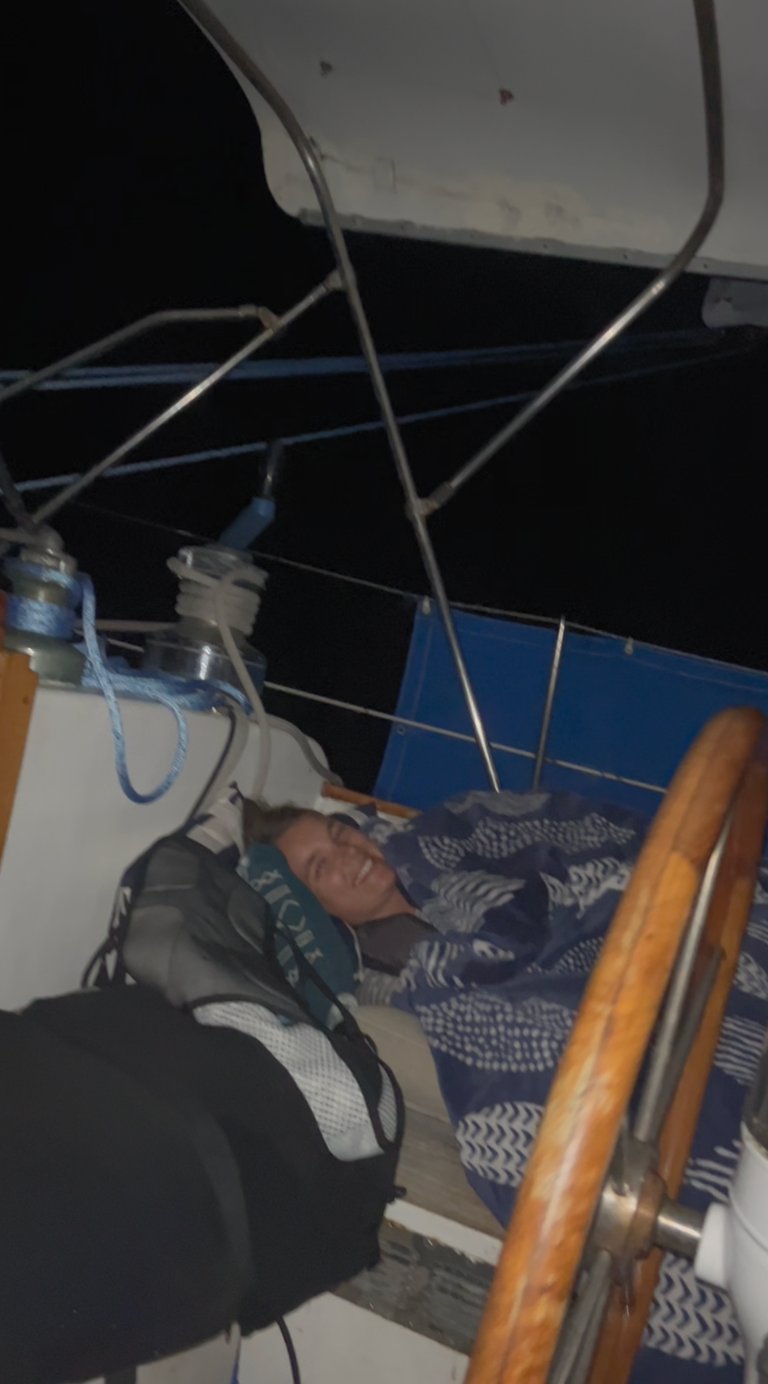
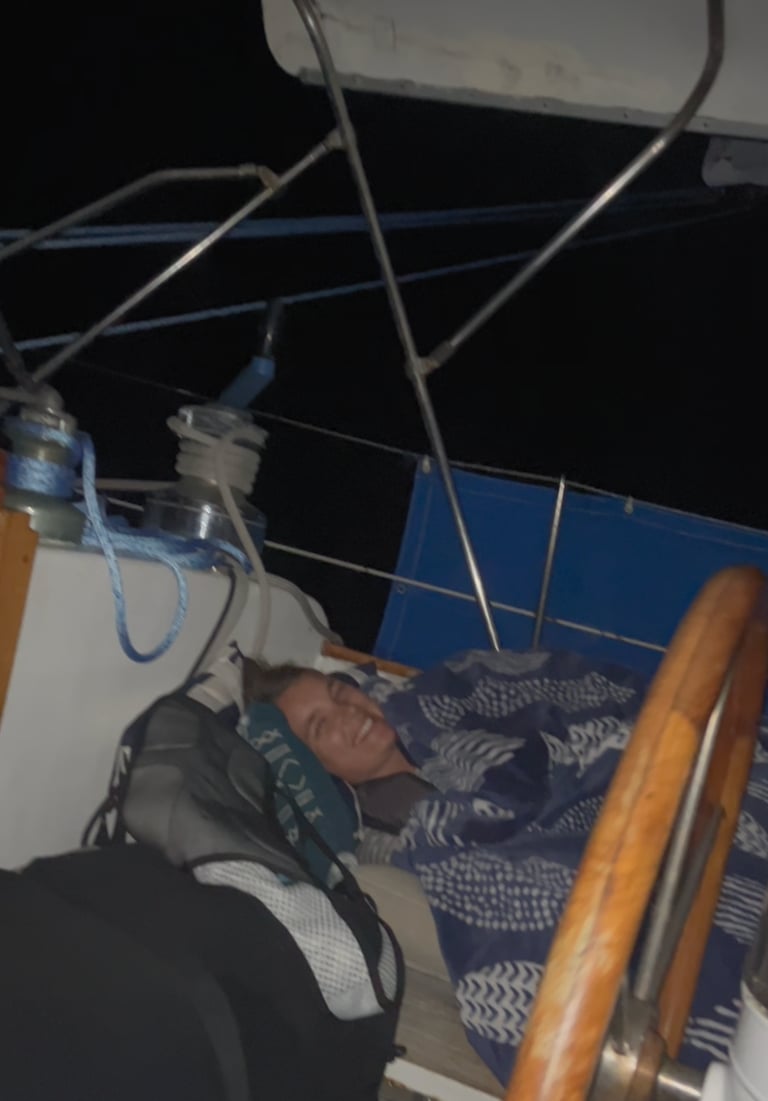
Eventually, Alex went below for some sleep while I took the first watch. Wrapped up in the cockpit, I monitored the wind, the sails, and the autopilot, making sure everything continued behaving itself. Unfortunately, sleeping below wasn't particularly restful. The waves were still rolling us around, gear occasionally shifted, lines rattled, sails rustled, and every time we surfed down a wave the propeller spun noisily in the water. Every now and then a sleepy voice would emerge from below: "Everything still okay?" "Yep!" A few hours later, after nearly no rest, around 1 a.m., Alex returned to the cockpit. We spent some time watching the ocean together while clouds slowly moved in and hid many of the stars. After chatting for a while, I curled up in the cockpit for a nap while Alex took over. And so we sailed through the night.
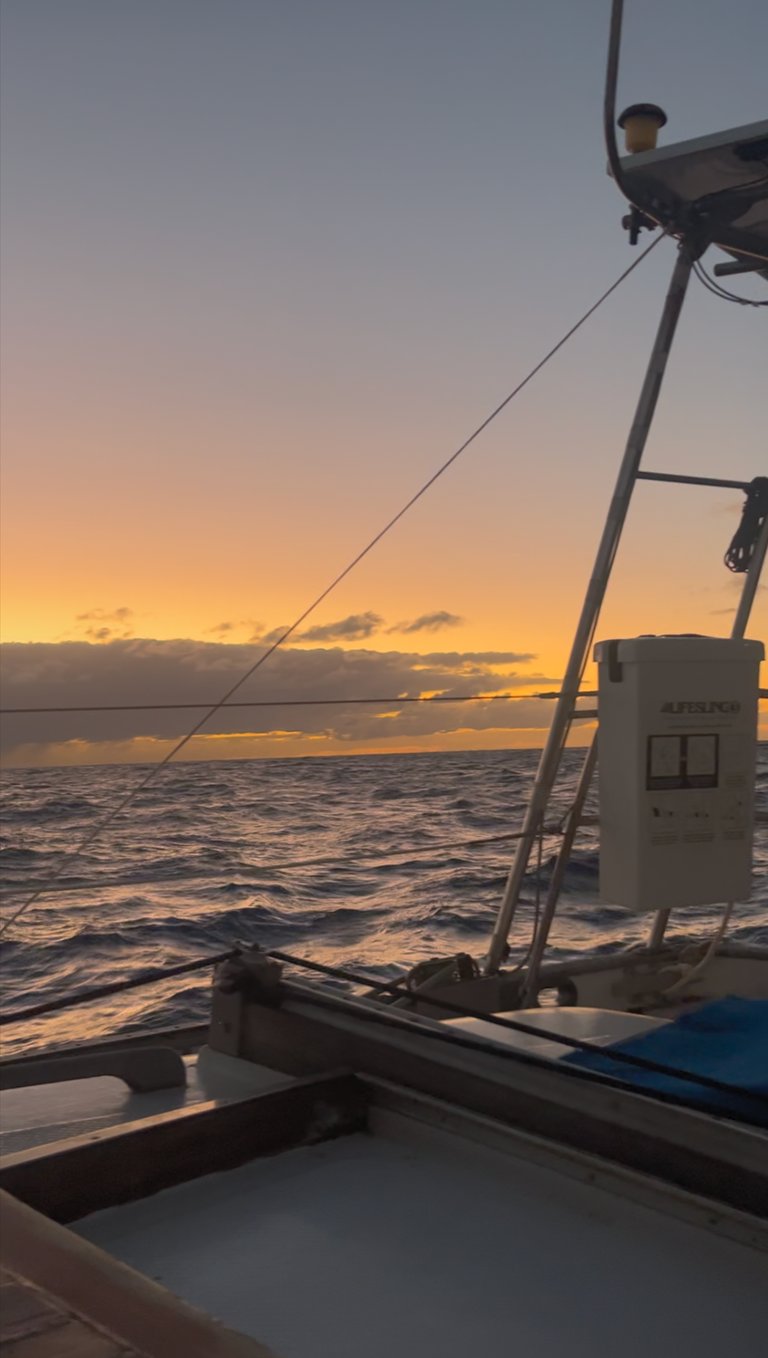
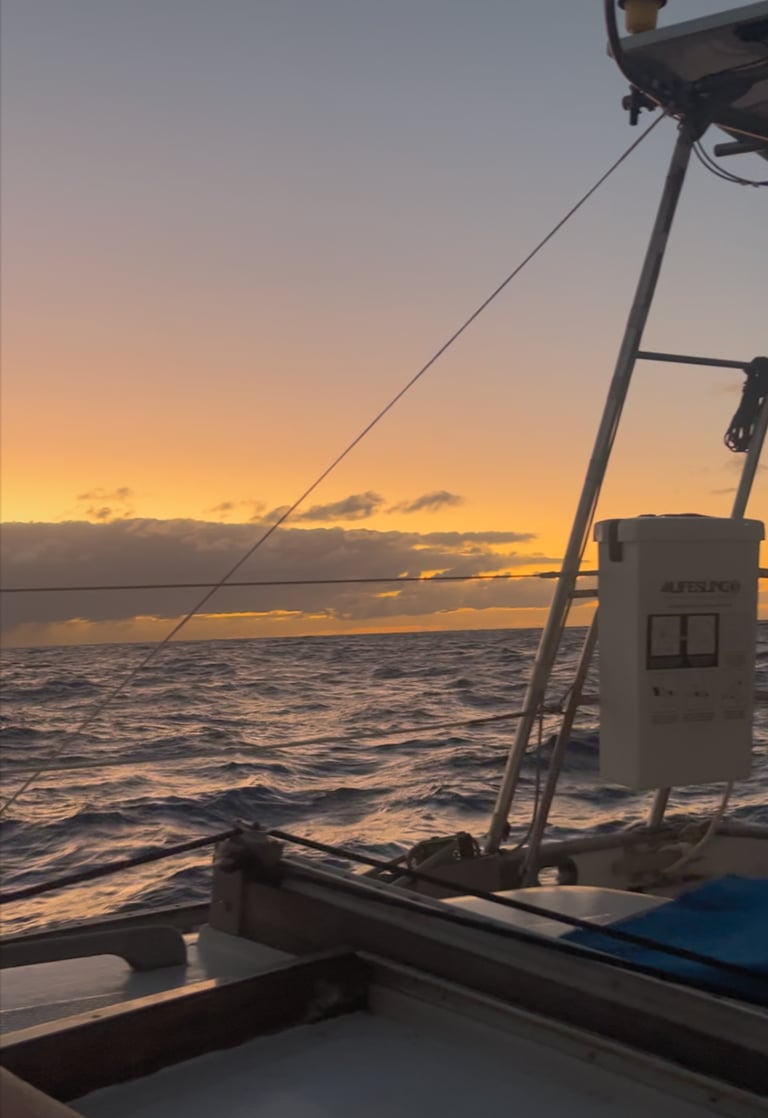
Around 6 a.m., the sun began to rise. At the exact same time, the wind apparently decided its shift was over. As the breeze faded, I took the helm while Alex went forward to set the full sail again. The sunrise was beautiful to watch but also in a sense relieving. We had made it through our first night without any issues. After enjoying it for a while, Alex headed back below for another hour of sleep. By now I was feeling much better and could finally sit upright without feeling too seasick. Shortly after sunrise, we spotted Huahine on the horizon. Seeing land was exciting. Realizing it would still take another half day to get there was slightly less exciting.
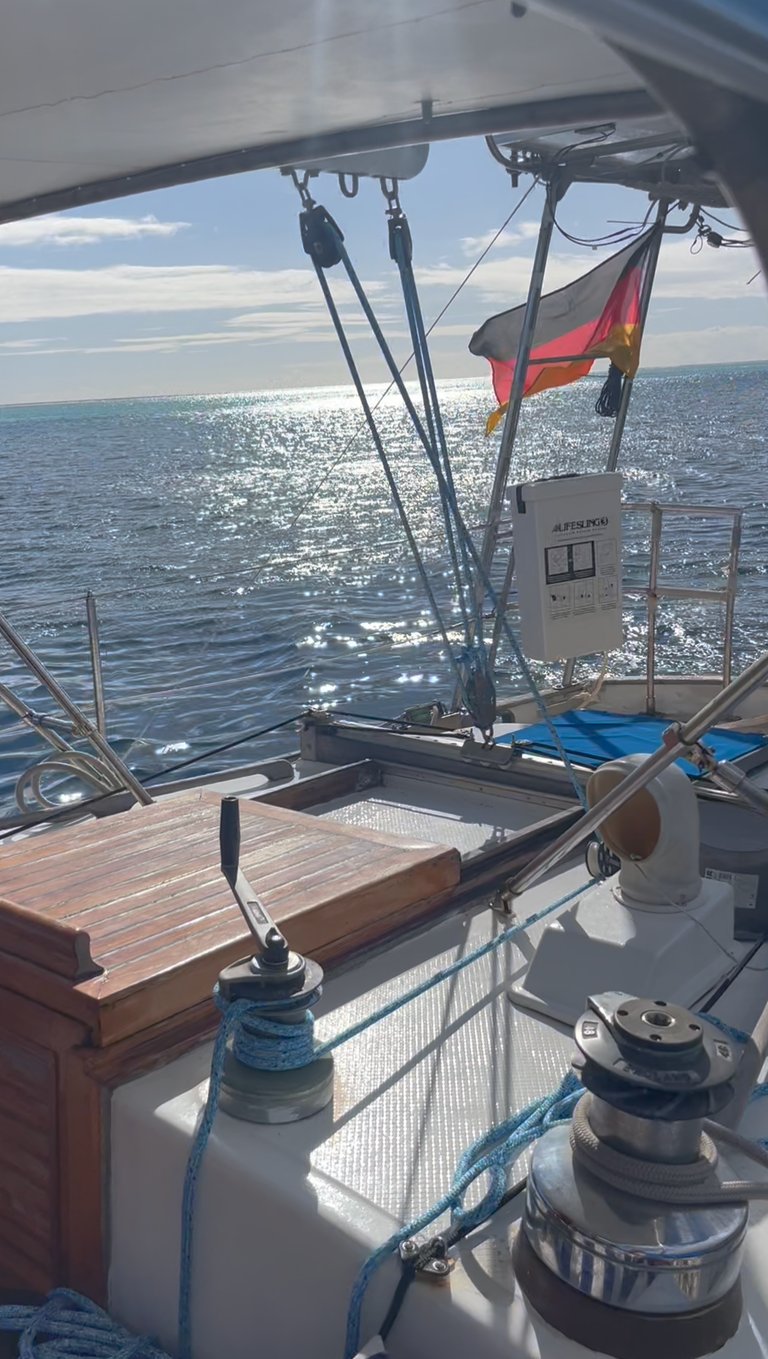
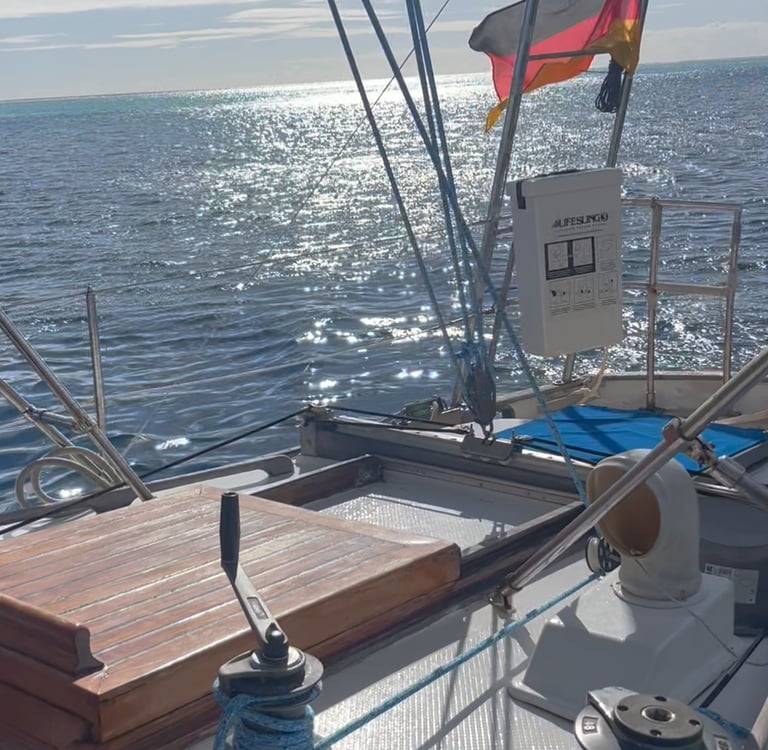
The wind spent the rest of the day doing its best impression of a light switch, varying anywhere between 5 and 20 knots while waves seemed to arrive from every possible direction. It was tiring sailing, but little by little the island grew larger. As we approached, Huahine revealed itself in all its beauty. Lush, green mountains rising from the sea and surrounded by crystal-clear water. We rounded the northern side of the island to keep favorable wind before entering through the northwest pass. The maneuver took longer than expected, and we had to keep a close eye on local fishing boats, but eventually we made it through.
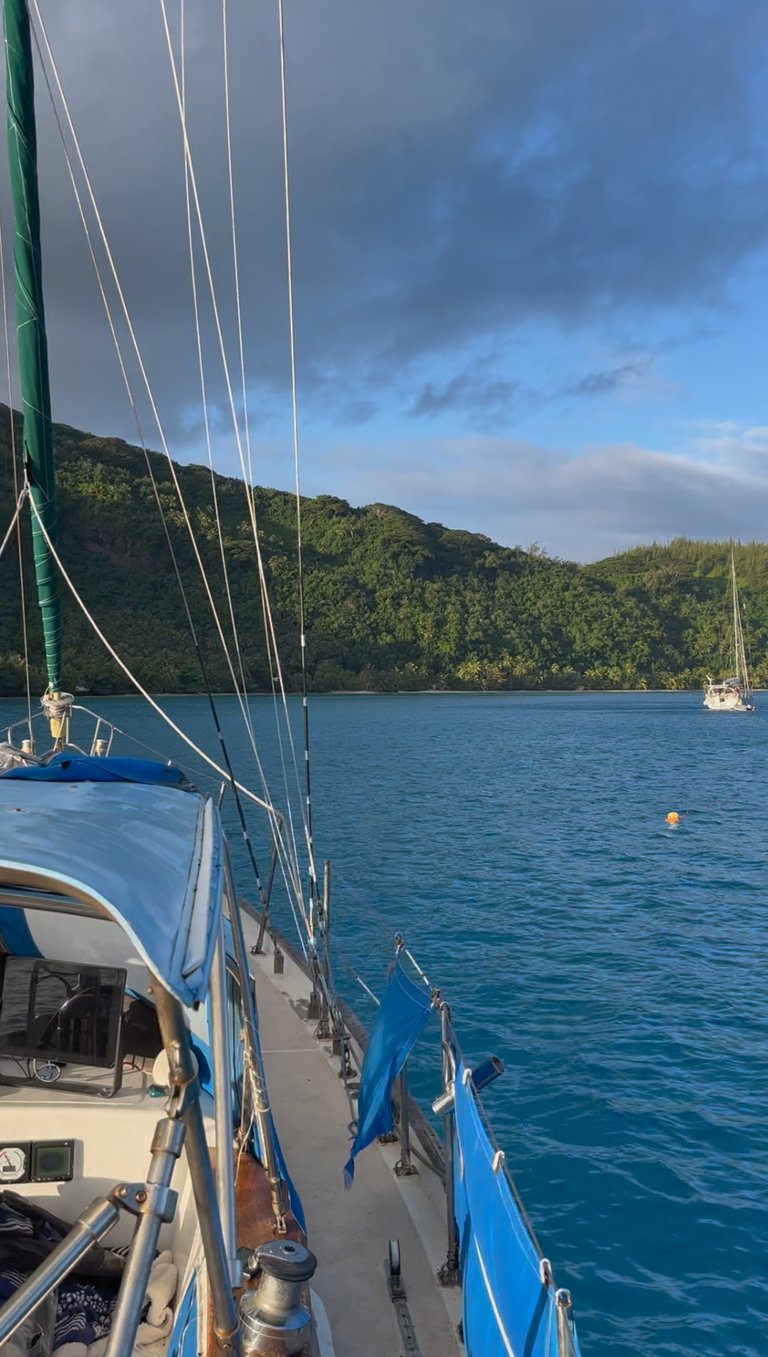
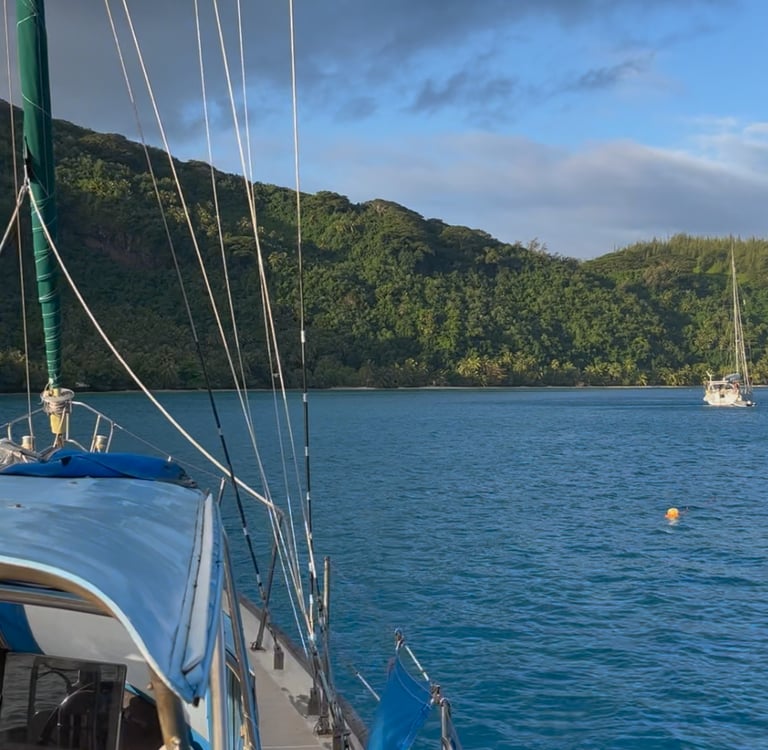
The final hour was under engine inside the reef as we made our way to an anchorage that had been recommended to us, for its supposedly excellent snorkeling. After a bit of rain the sun came out again and presented the water and the island in its most beautiful colors. When the anchor finally set, after about 24 hours underway, we were exhausted but incredibly happy. To celebrate our first 100-nautical-mile passage, we poured us a well-earned Spezi, cooked a tasty plate of noodles, and spent a while simply enjoying the feeling of having made it. At 6:30 p.m., we crawled into bed. This time there were no rolling waves, no banging lines, and no midnight reefing maneuvers, just a calm anchorage, tropical scenery, and the satisfaction of completing our first real offshore adventure together. What a way to start our journey. As we fell asleep that night, we felt tired, proud, and very excited for all the miles still ahead.
If you’d like to read more, follow our journey, and support what we do, don’t forget to subscribe to our newsletter or follow us on social media. Every bit of encouragement helps keep the adventure going and we’d love to have you aboard!