


Palmerston Atoll
A Place Where Cruisers Become Family
After a quick two-day crossing with surprisingly little excitement (except for a few flying fish that decided our cockpit was a better place to spend the night than the ocean), we approached one of the most remote places we had ever sailed to: Palmerston Atoll. Of course, we arrived at night. But this time, sunrise was only about an hour away, so instead of rushing, we dropped the sails and slowly started motoring toward the area where we expected the mooring buoys to be. And then suddenly: BEEP. BEEP. BEEP. The engine alarm went off. Overheating. Not again.
Alex had been on night watch for the previous few hours and was already running on very little sleep. We immediately checked the usual suspect: the impeller. It would have been a little ironic if that had been the problem, considering we had literally just replaced it. Luckily, it was still perfectly fine. Alex went down for a quick nap while I started investigating. The coolant level looked good, so I grabbed our engine book and started going through possible causes. One thing caught my attention: low oil. A quick check confirmed it, the oil level was indeed a bit low.
After adding some fresh oil, we started the engine again. No alarm. No overheating. Back to normal. Was the oil actually the problem? We still don’t know for sure. Maybe there was some blockage somewhere in the water intake system, or maybe the engine just needed that little bit of extra oil. Either way, the important thing was that our trusty engine was running again. Alex, who had only managed about 20 minutes of sleep before getting back up to help with the oil, moved to the front of the boat. His new mission: keeping watch for any sign of the mooring buoys while I steered toward our coordinates.
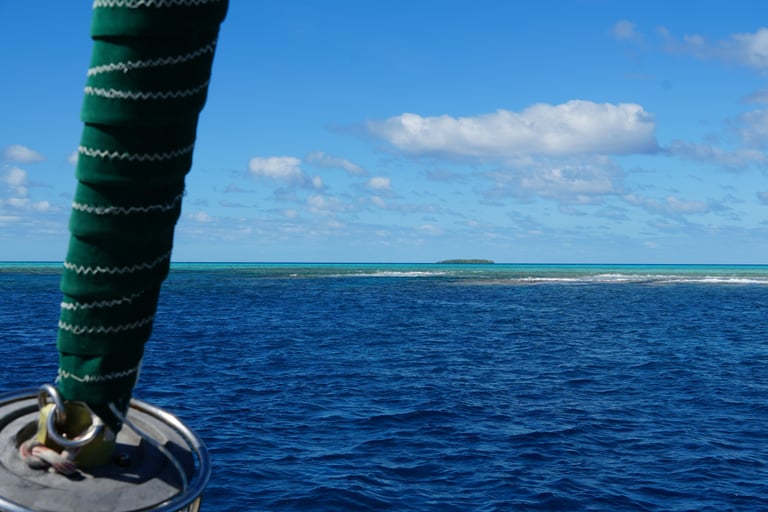
The sun was slowly giving us more light, but I have to admit, I was getting nervous. The reef, which is surprisingly difficult to see, was getting closer and closer on the chart, and I still couldn’t spot a single mooring ball. Then suddenly: “I see it!” Alex had spotted it. A few minutes later, we were safely tied up, the engine was off, and we could finally breathe. Alex disappeared straight back into bed, while I sat in the cockpit enjoying the peaceful morning and keeping an eye out in case someone came to welcome us. And on Palmerston, a welcome is not something you have to wait long for.
A Different Kind of Arrival
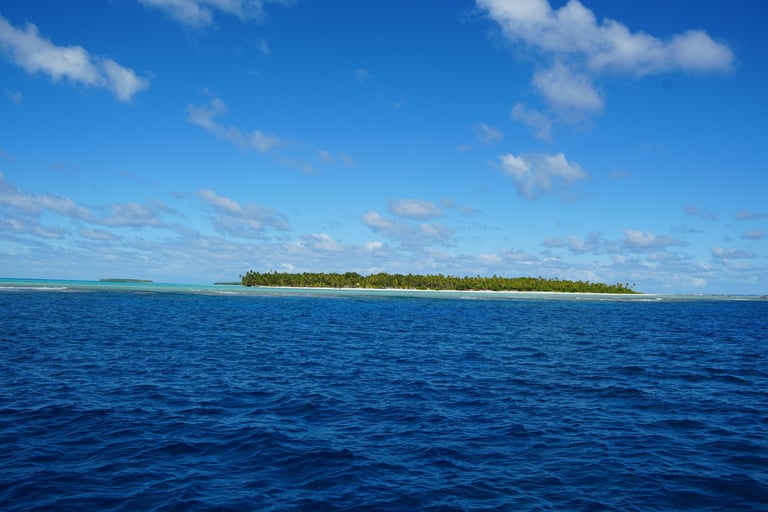
Palmerston works a little differently from most places. You cannot simply sail through the pass and anchor inside the lagoon with your own boat. Instead, visiting yachts stay outside the reef, and the locals come out with their dinghies to guide you through the narrow and challenging pass. They know these waters better than anyone and help bring you safely in and out. But Palmerston is not just remote, it is incredibly isolated. Fewer than 60 people live here. There is no airport, and supplies arrive only every four months on a container ship, if the ship comes at all. Because of this, visiting cruisers often bring requested supplies from other islands. Before arriving, we contacted the community to ask if there was anything they needed. The answer was simple: 12 dozen eggs and two cabbages. So while we were still in Aitutaki, we went shopping.
On Palmerston, cruisers are not just visitors. They are part of the island’s connection to the outside world. Usually, one local family hosts arriving boats. They help with everything: guiding you through the reef, organizing clearance, showing you around the island, and often even cooking meals. Our host was Eddie. And we could not have asked for a better welcome.
Welcome to Palmerston
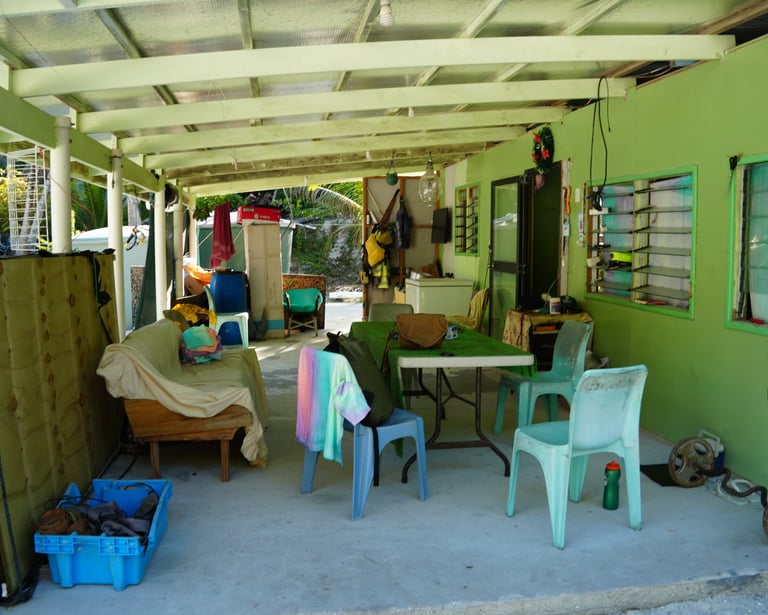
After two days at sea, we decided not to call on the radio immediately. We had finally arrived, and we wanted to take a quiet moment to simply enjoy being there. The sun was shining, the ocean was calm, and for the first time in days, there was nowhere we needed to be. Around midday, we saw a small boat approaching from the island. It was Eddie. With a big smile, he welcomed us to Palmerston and told us he would organize the customs and biosecurity clearance. He said he would be back in about an hour and true to his word, he returned exactly as promised. This time, he brought Juliana with him, the island’s clearance and biosecurity officer. She guided us through the paperwork and explained a little bit about life on Palmerston. One thing they are especially careful about is rats. A few years ago, the island finally got rid of a rat infestation that had caused serious damage to the local plants and even affected the chicken population. Since Palmerston is so isolated, protecting their fragile ecosystem is extremely important, and they couldn't afford a new wave of rodent terrorists. Luckily, Tauha had no unwanted furry passengers hiding onboard. After we were officially cleared in, Eddie took us through the reef and onto the island. We stepped onto a beautiful sandy beach and followed a small sandy path toward his home. His brother was already there, and before we knew it, we were sitting together, sharing stories, laughing, and learning about life on this tiny piece of land in the middle of the Pacific. Then Eddie disappeared into the kitchen. A little later, he came back carrying a plate of food: fresh parrotfish with onions and rice.
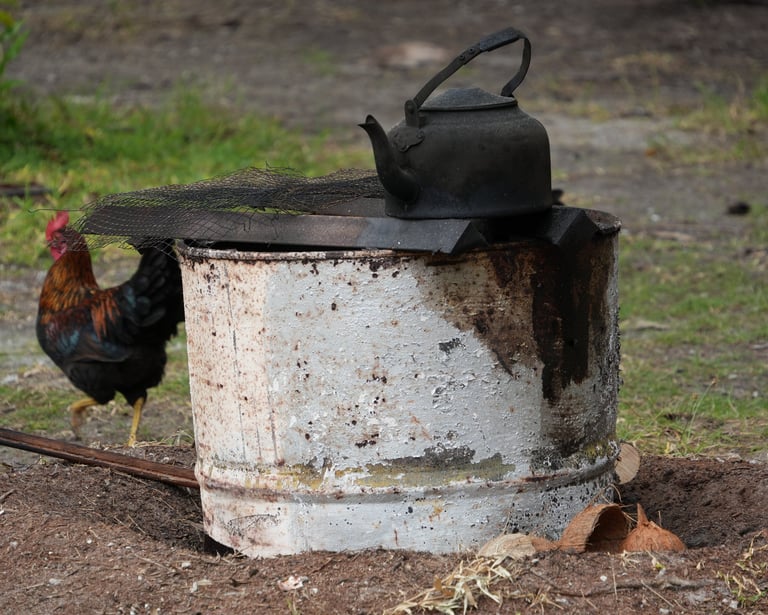
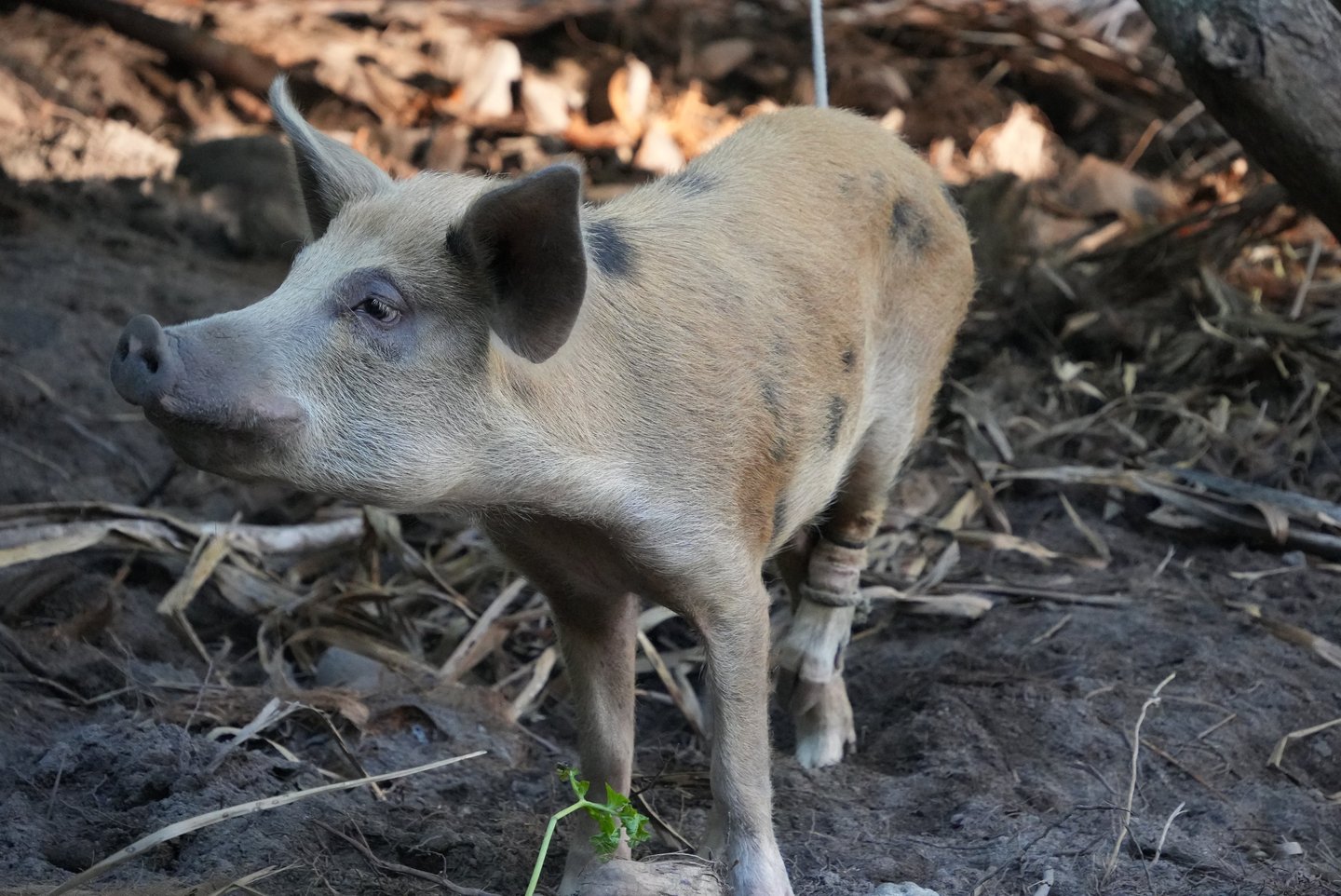
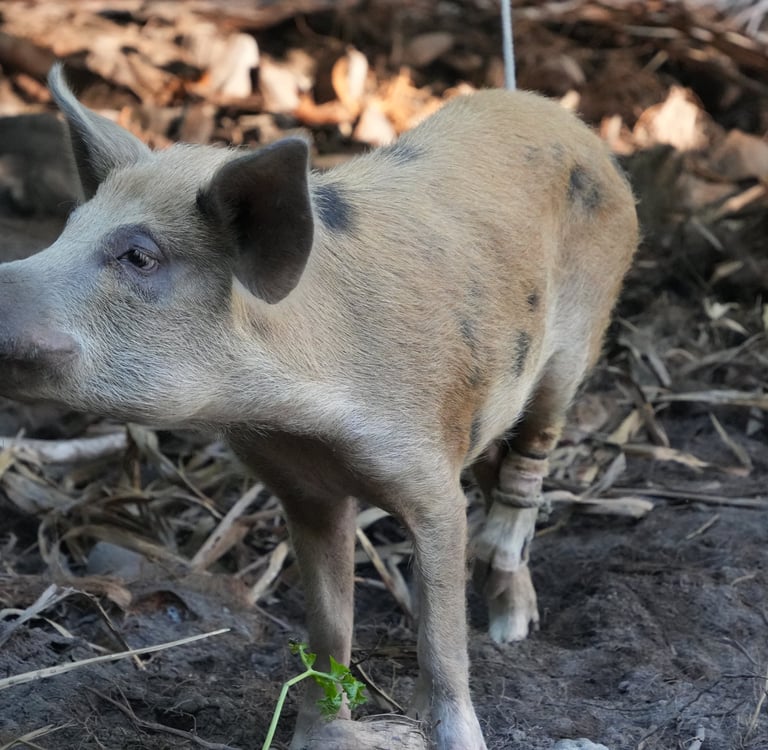
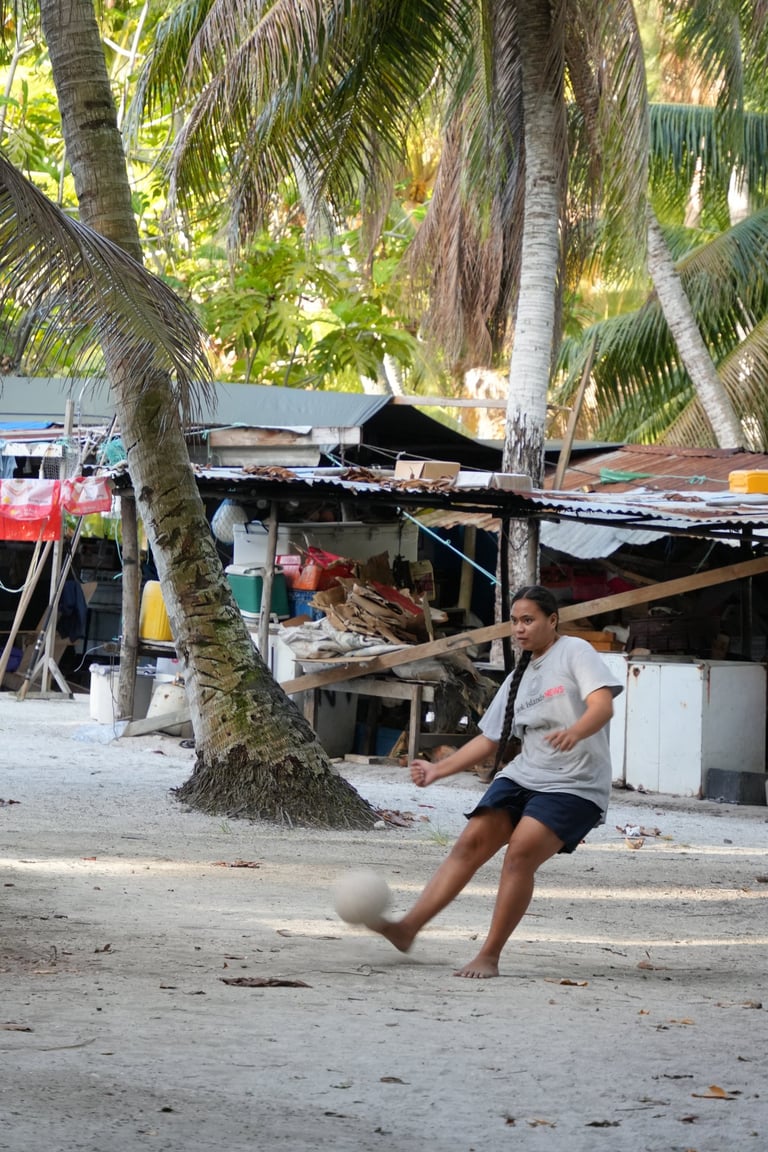
Somehow, the island knew that parrotfish was our favorite fish we had eaten so far in the Pacific. It was simple, fresh, and delicious. Around us, life on Palmerston continued at its own slow rhythm. Chickens wandered freely between the houses, and pigs searched beneath the coconut trees for fallen coconuts. It felt like we had stepped into a completely different world, one where the ocean, the people, and nature all moved at their own pace.
Exploring Palmerston
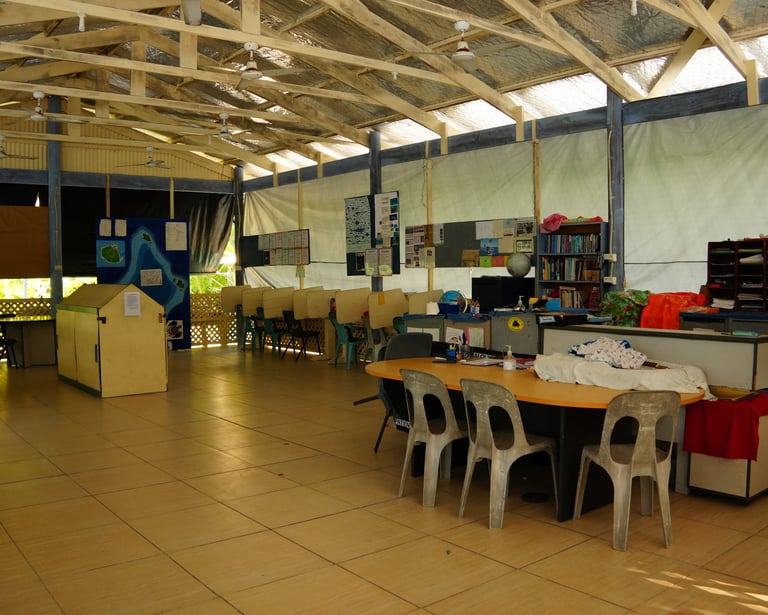
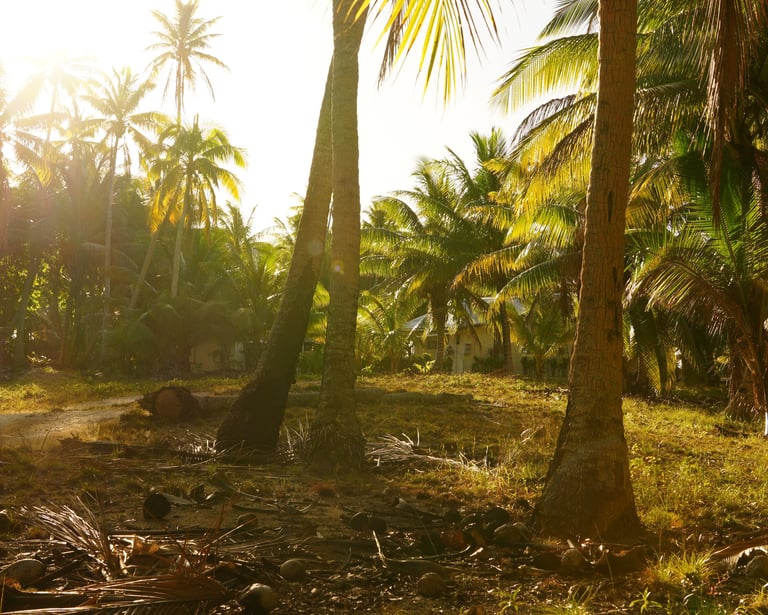
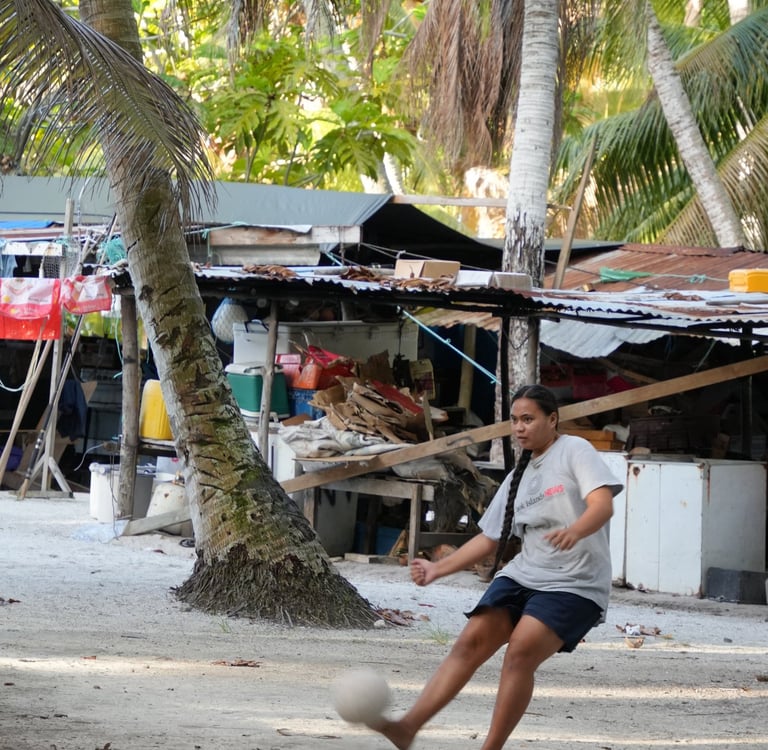
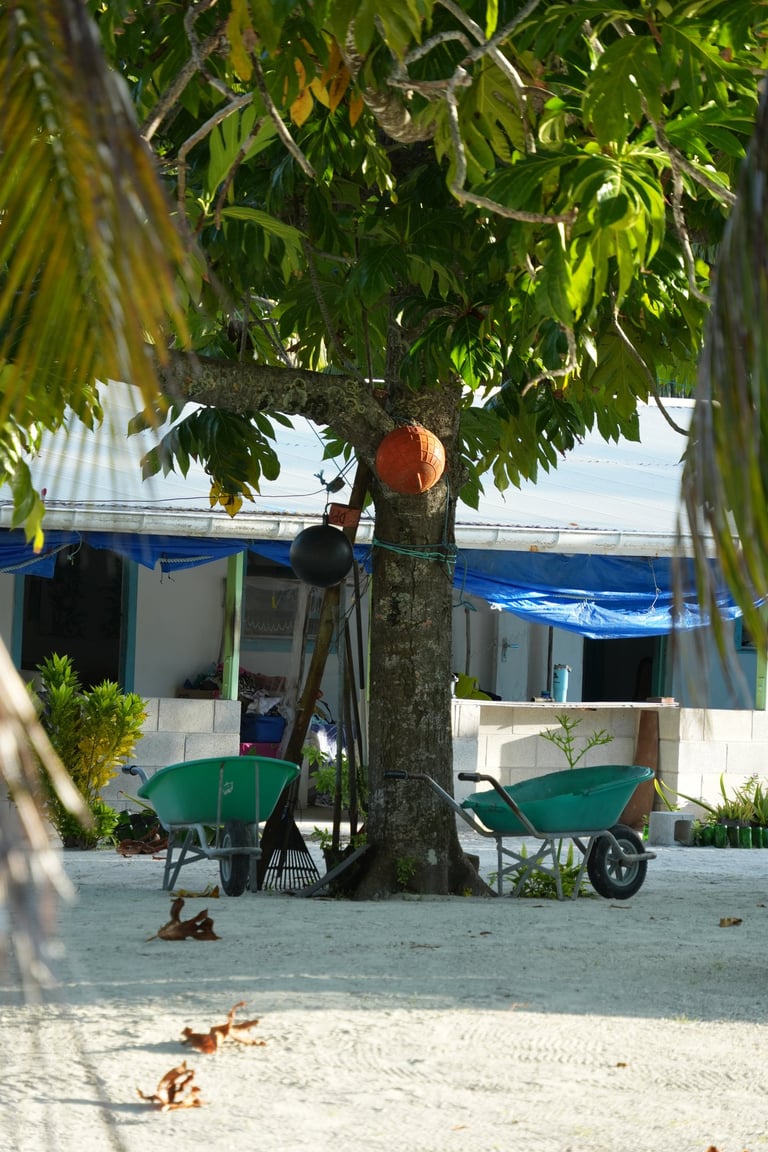
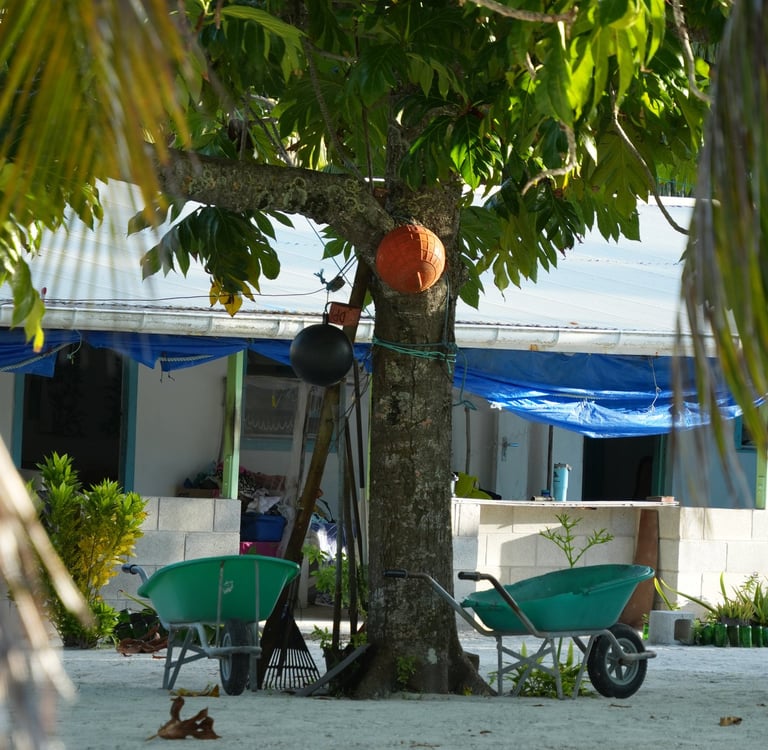
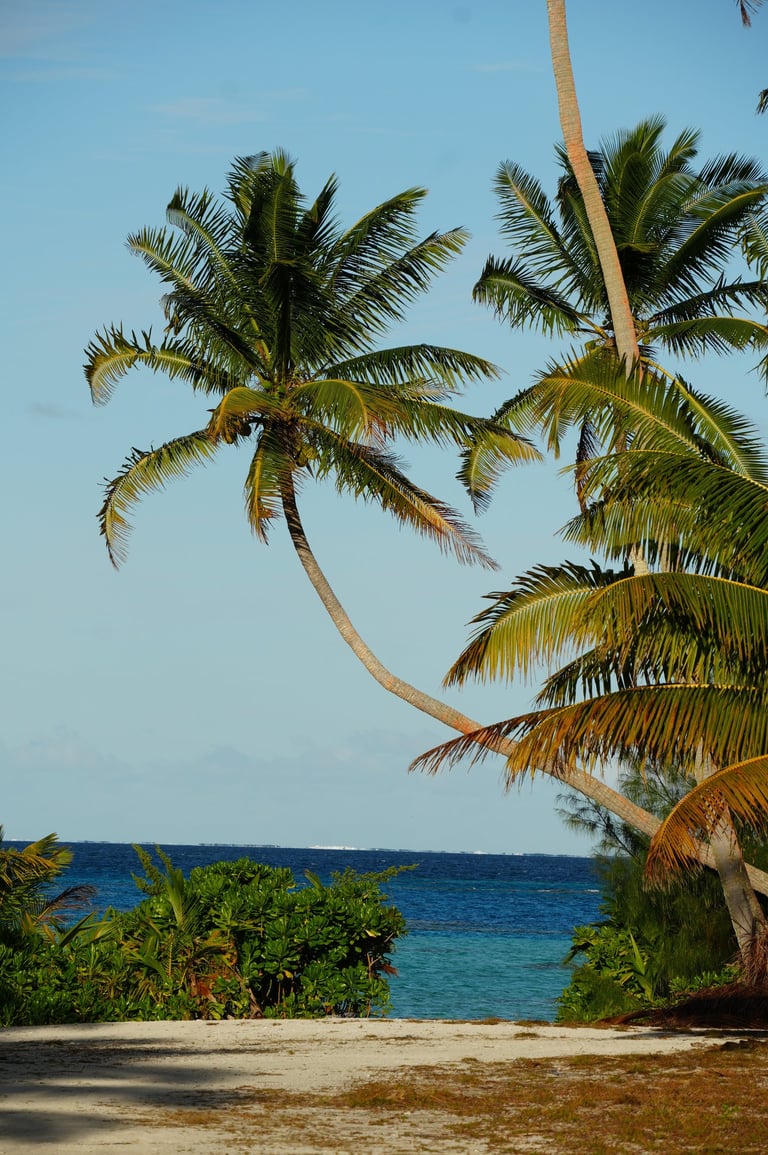
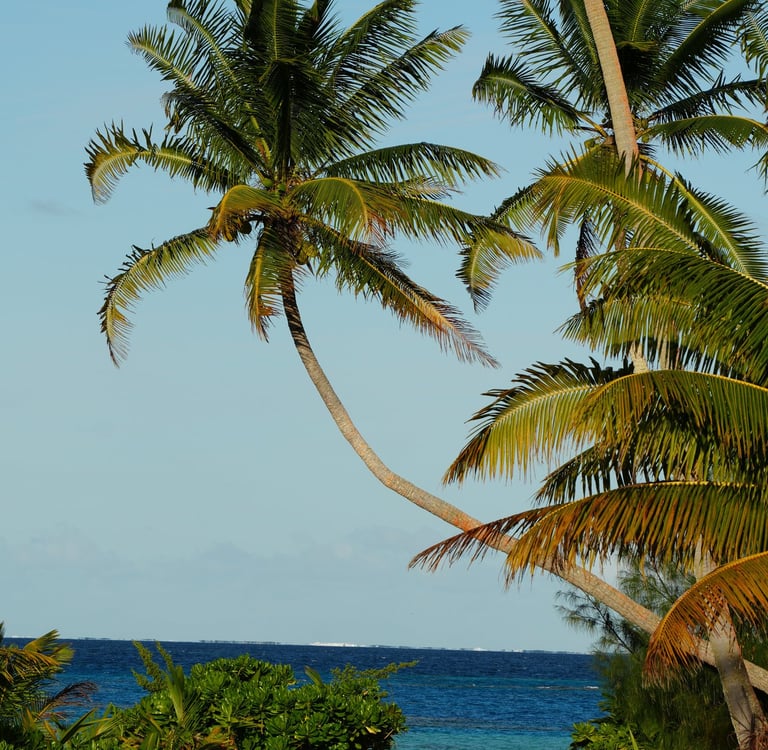
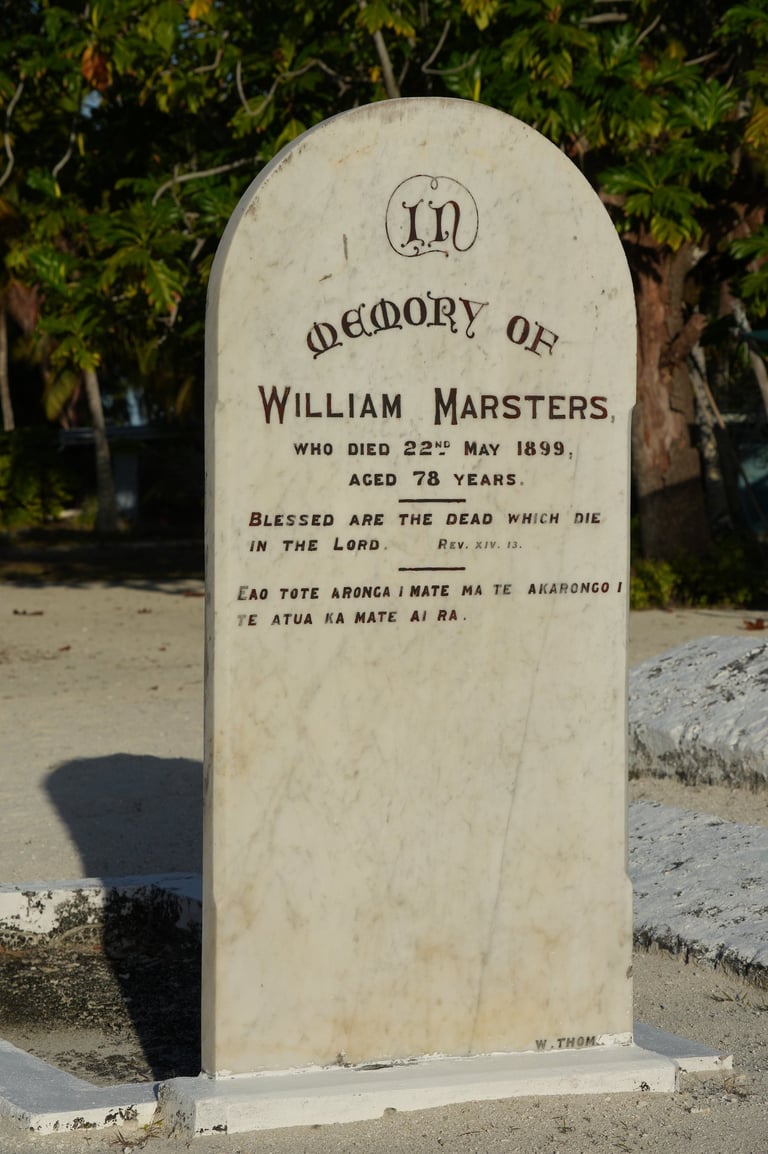
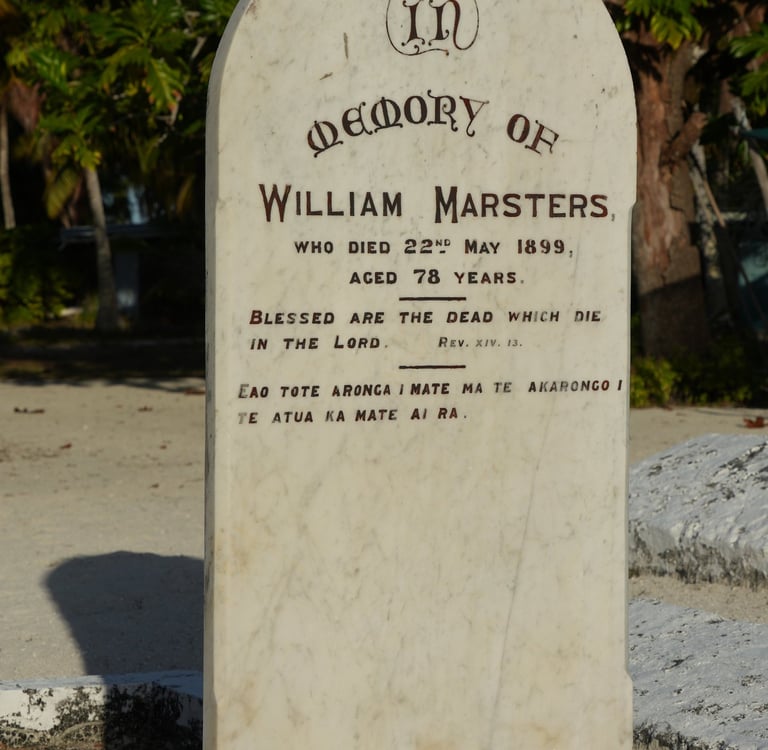
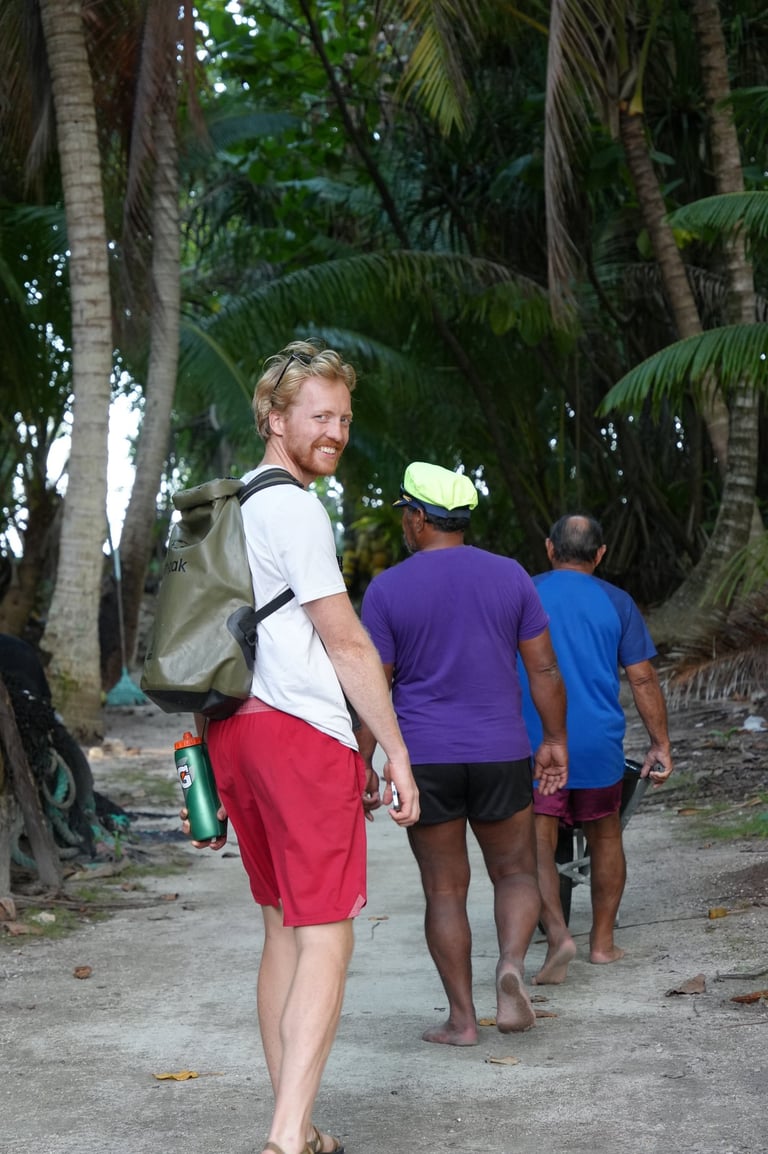
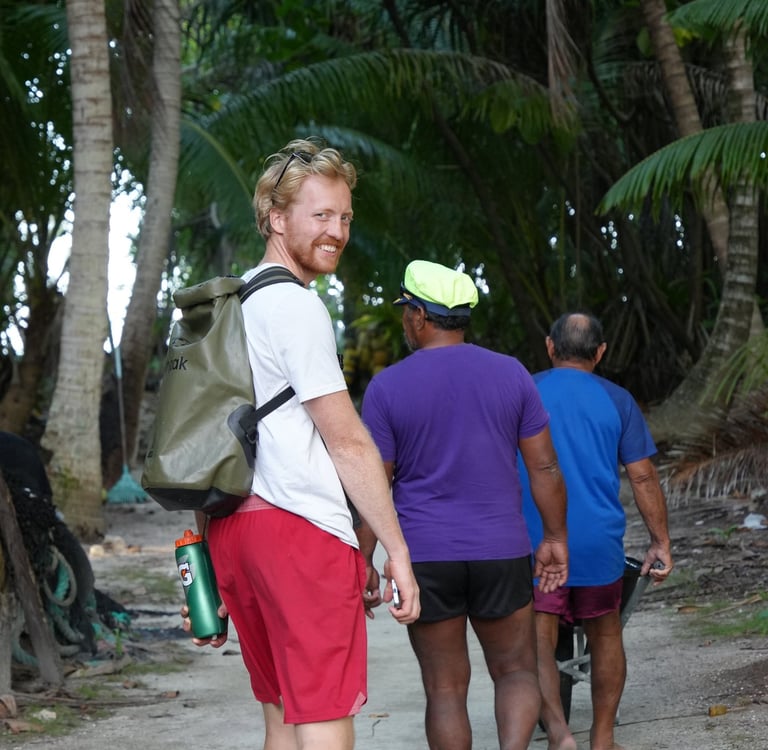
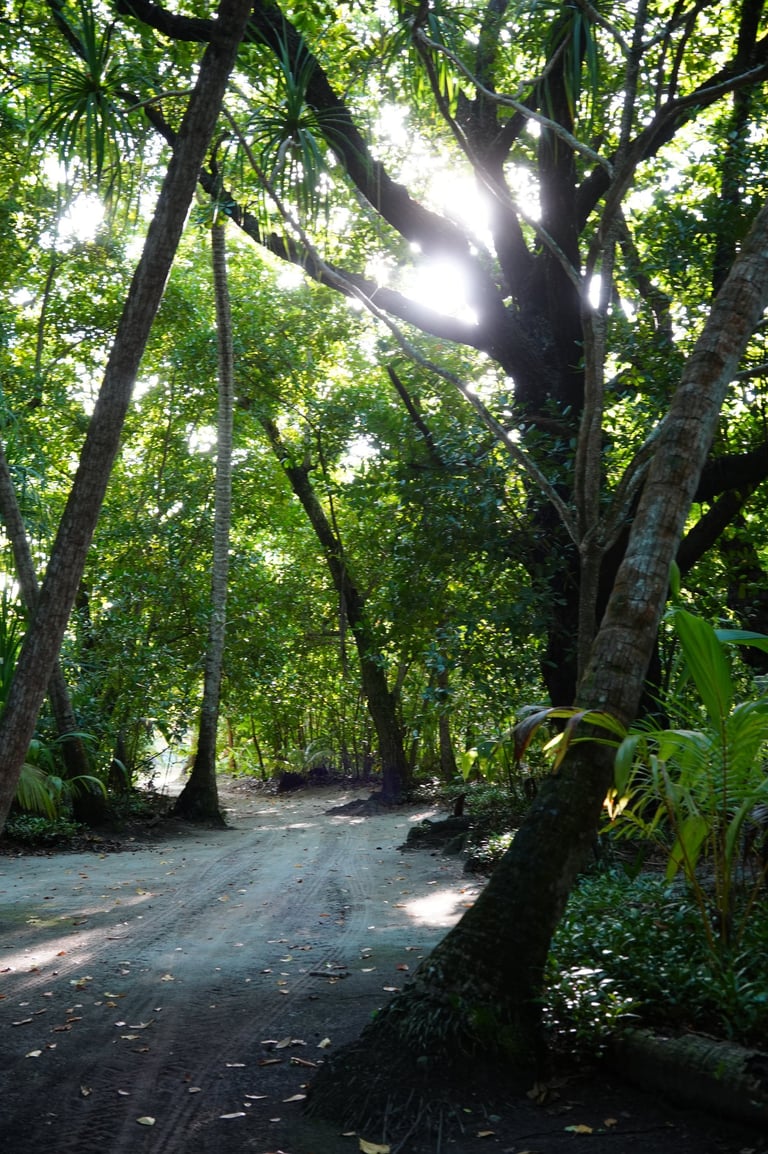
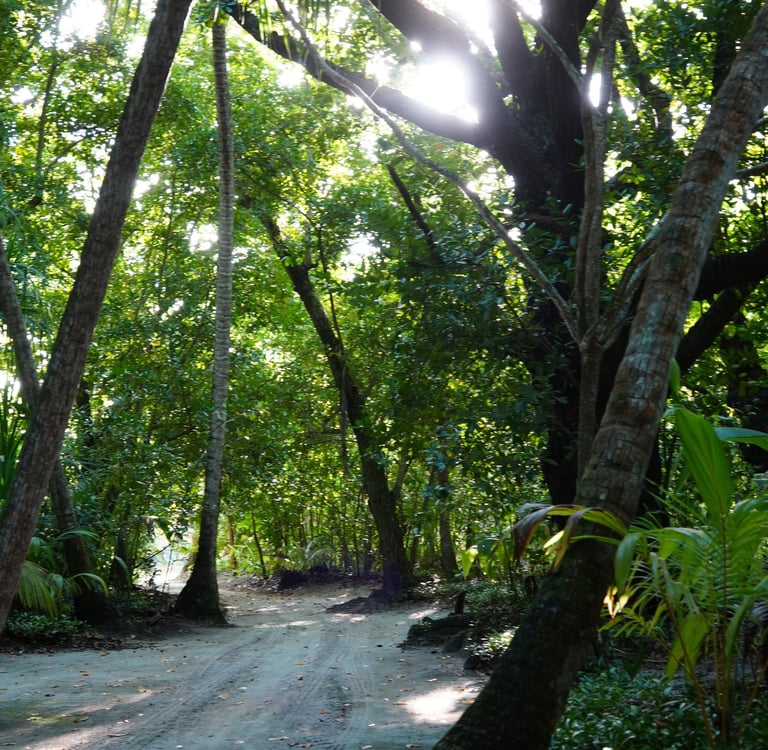
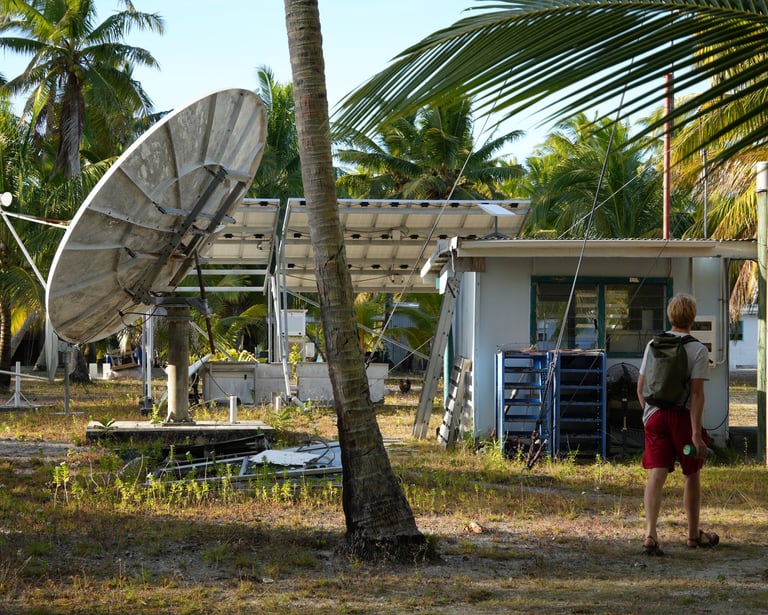
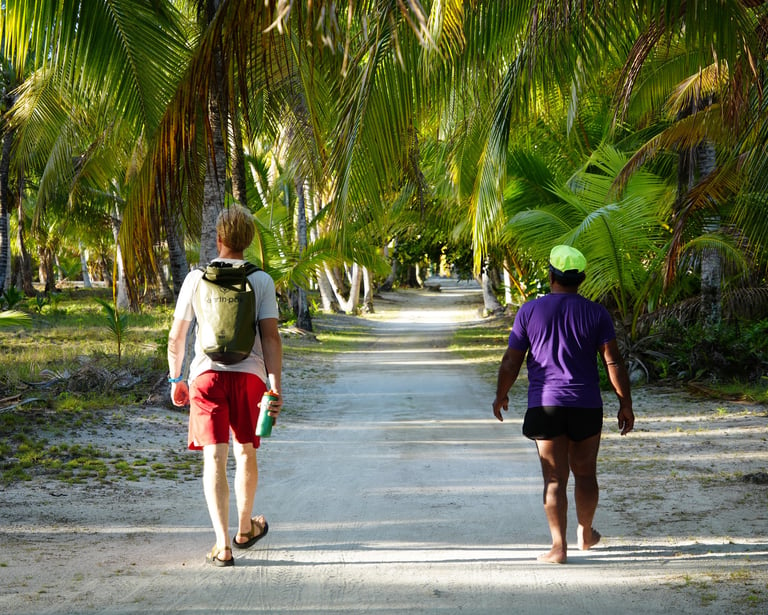
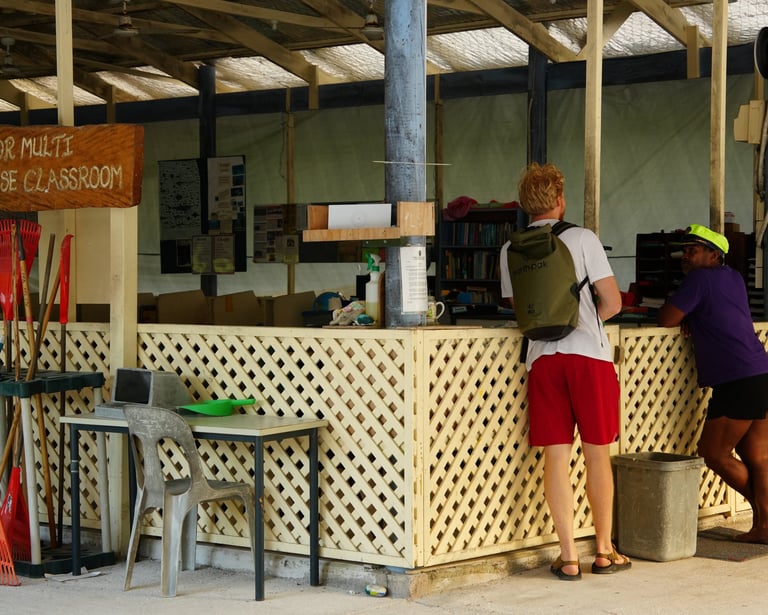
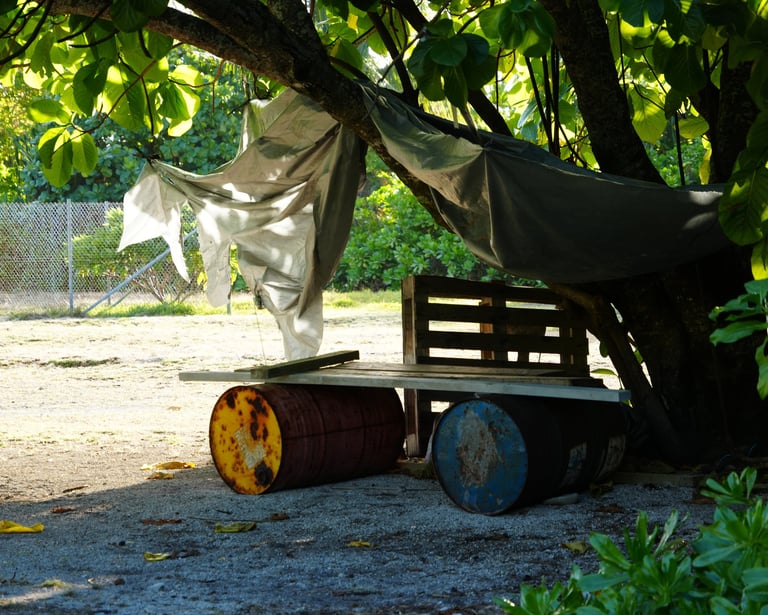
After our late lunch, Eddie took us on a tour of the island. We followed the “main road”, although calling it a road might be a little generous. It was more of a sandy path winding between houses, coconut trees, and the shoreline. Along the way, Eddie showed us the solar farm, the school, the family homes, and the beautiful beaches on the other side of the island. He also took us to the cemetery, where William Marsters, the founder of the Palmerston community, is buried, and showed us his old house. As we walked around, it became clear just how unique this place was. Beyond the postcard scenery, the island also has a fascinating history. Eddie explained that the entire community traces its roots back to William Marsters, an Englishman who arrived here in the 1800s. He eventually had three wives, and today the three family groups living on Palmerston all descend from those three family lines. It is incredible to think that almost everyone on the island shares a connection to the same story that began nearly two centuries ago. We also found out that even a tiny island with fewer than 60 inhabitants has a police officer. That person is Eddie himself. We couldn’t help but smile at the idea of a place this small having its own sheriff. But in reality, it perfectly showed the pride and responsibility everyone carries for their little island community.
Fishing at Sunset
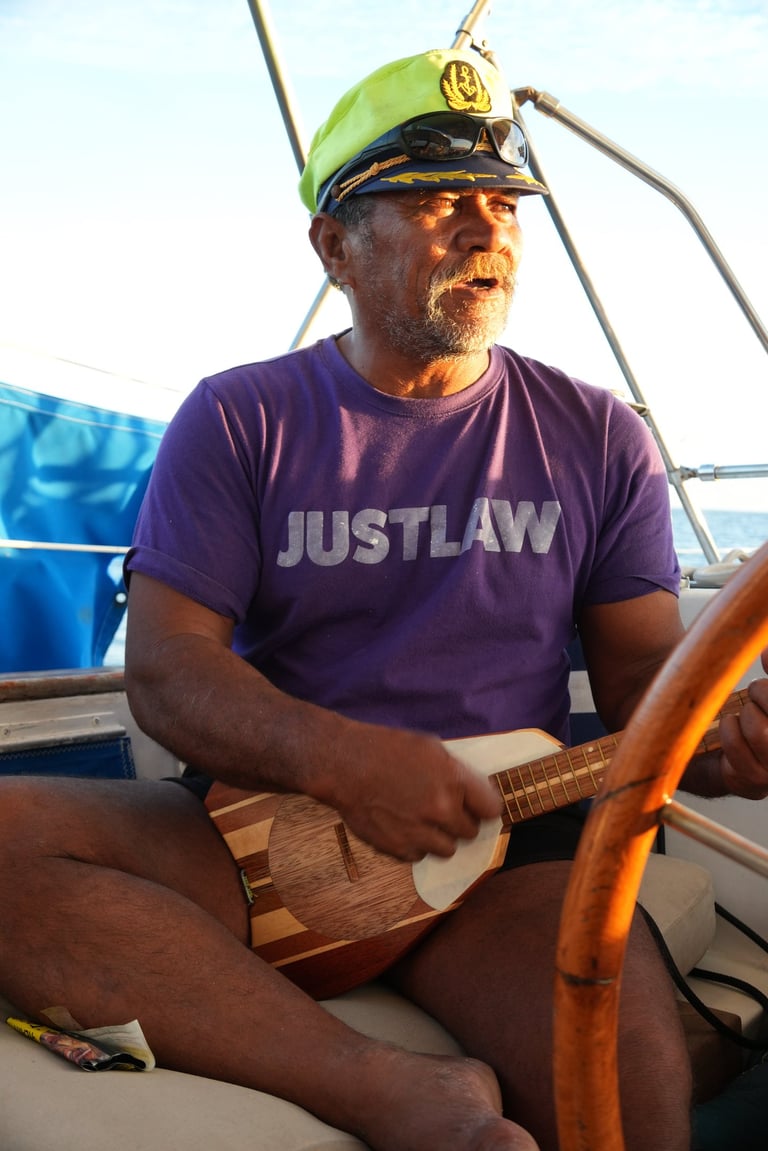
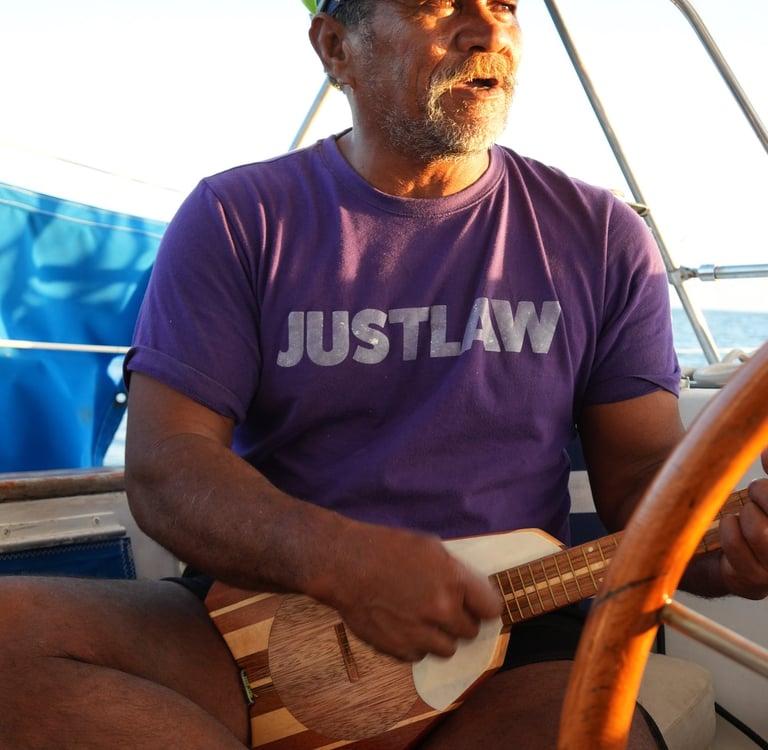
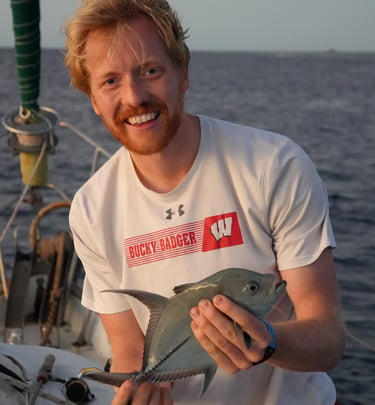
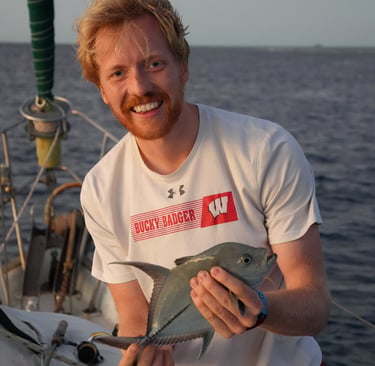
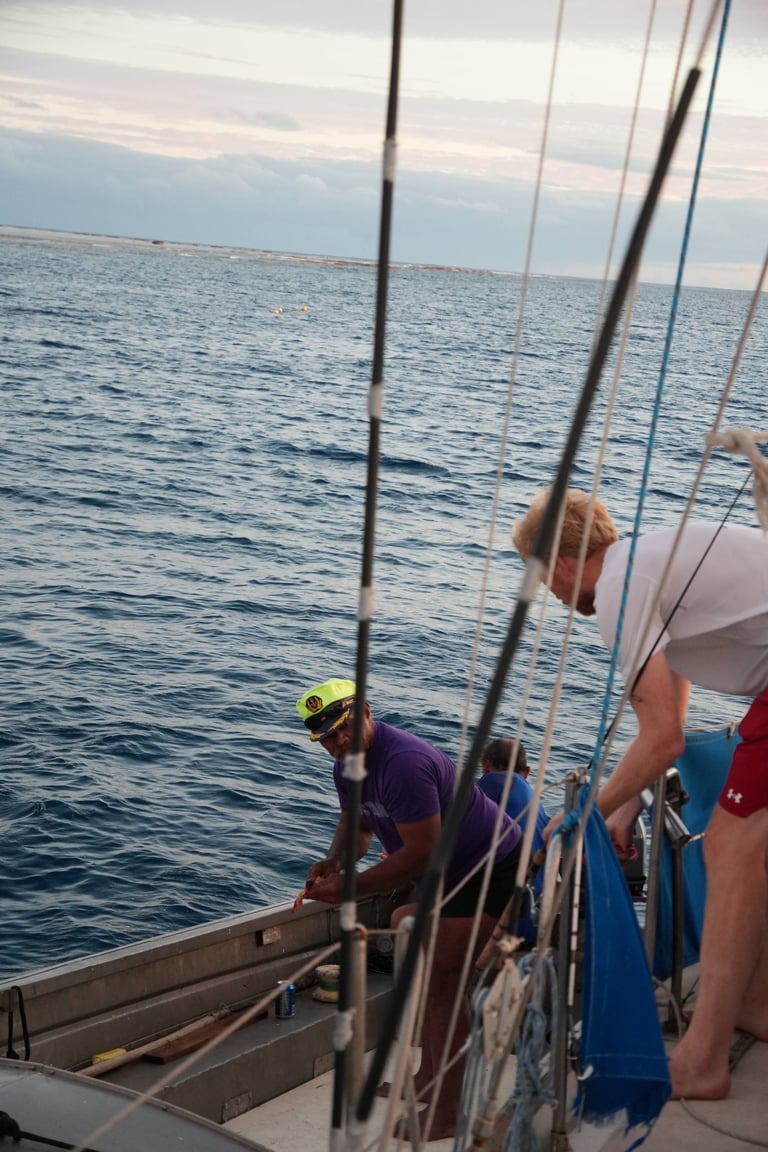
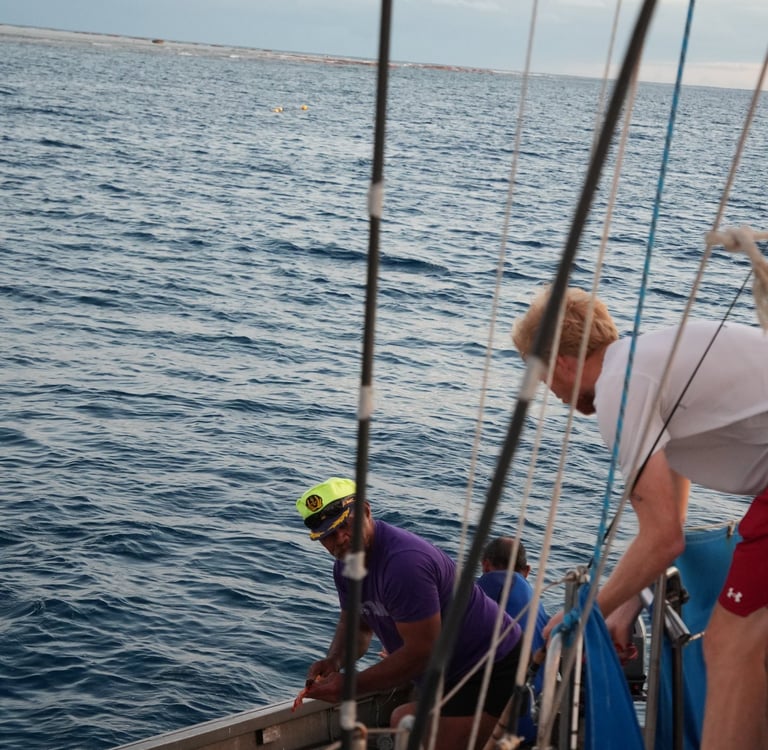
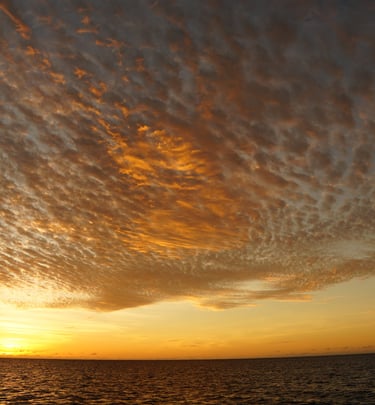
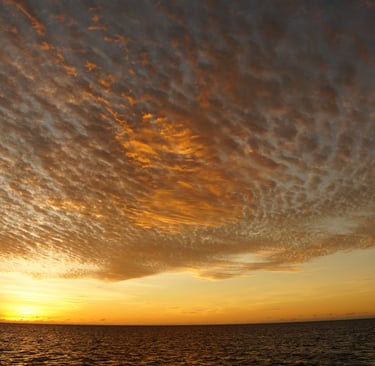
As the afternoon slowly turned into evening and the sun began to dip lower, Eddie brought us back to Tauha. But before heading back to shore, he had one more question: “Can we tie onto your boat for a little fishing?” Of course, we said yes. Soon, Eddie’s brother was sitting in their small boat next to Tauha, casting his line, while we relaxed in the cockpit, sharing some beers with them. At some point, Eddie picked up our ukulele, and started playing and singing. And there we were. Anchored outside a tiny, remote island in the middle of the Pacific, listening to music while the sun disappeared behind the reef. It was one of those moments where you don’t need anything else. No plans. No schedule. Just good people, a beautiful place, and a memory being created right in front of you. As the last light faded and sunset arrived, the fishing became more serious. The goal for the evening was Black Jack. Alex joined in with his fishing rod, and after a while, he finally had something on the hook. Excitedly, he started bringing it closer to the boat. But just as the fish was about to reach the surface, something moved below. A shark. It came straight toward the hooked fish and, without hesitation, stole it right off the line. A spectacular reminder that out here, we were definitely not at the top of the food chain. Luckily, Alex got another chance and managed to land one before the sharks could claim it. Eventually, as darkness settled over the lagoon, Eddie and his brother decided it was time to head back to shore. Alex stayed out a little longer, hoping for one more catch. But after another fish disappeared into a shark’s dinner, he decided that was enough excitement for one evening. Before leaving, Eddie invited us to join him and his son for fishing the next morning. Apparently, fishing wasn’t just a hobby for his son, it was his main job on the island.
We didn’t need any more convincing. We were in.
Fishing Palmerston Style
The next morning, Eddie and his son John picked us up around 8 a.m. We came prepared. I brought my camera. Alex brought his fishing skills.
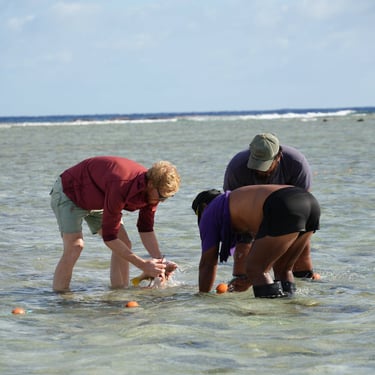
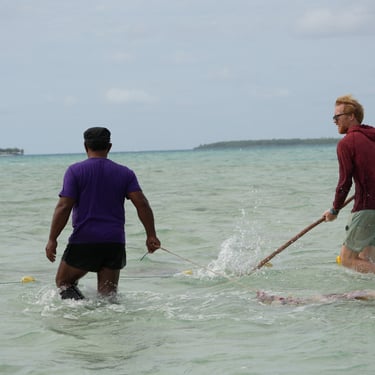
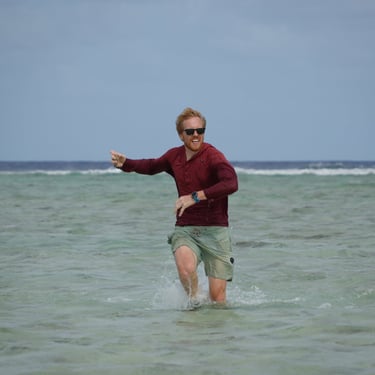
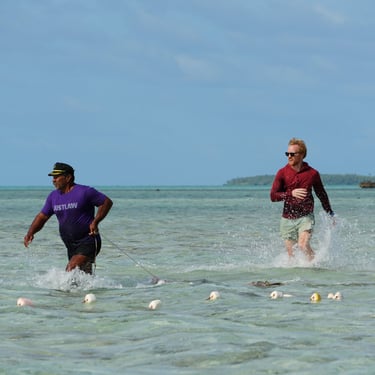
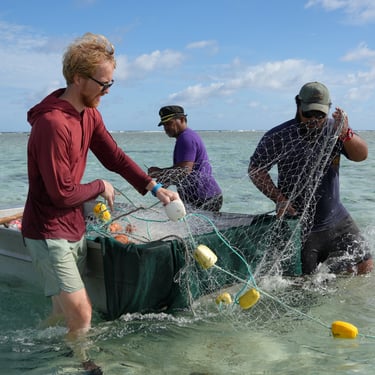
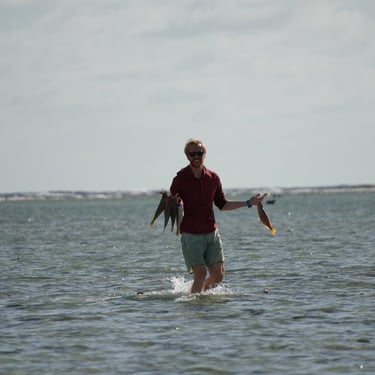
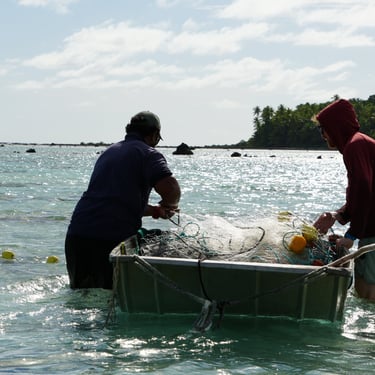
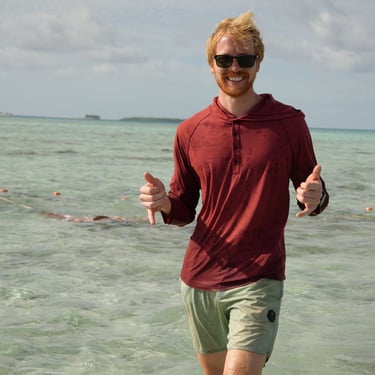
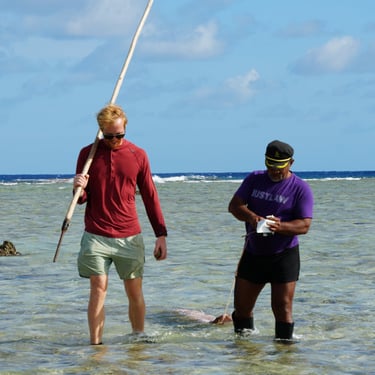
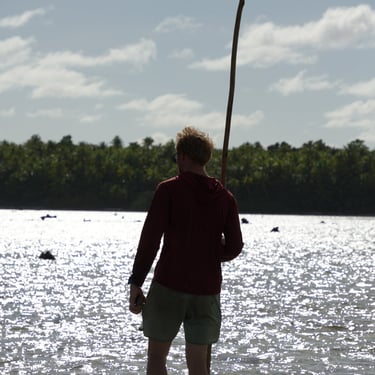
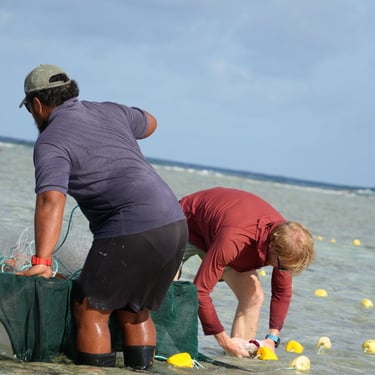
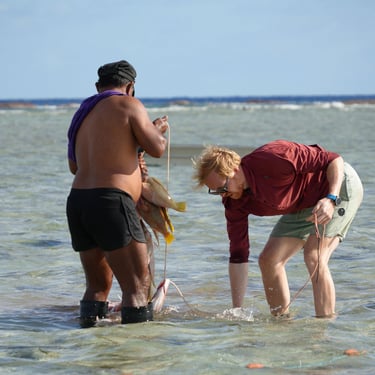
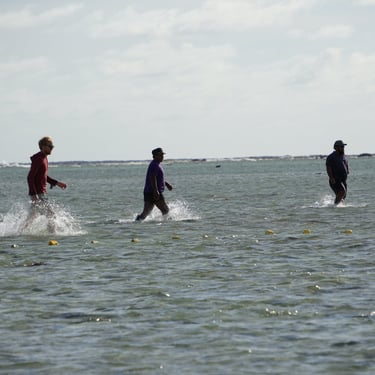
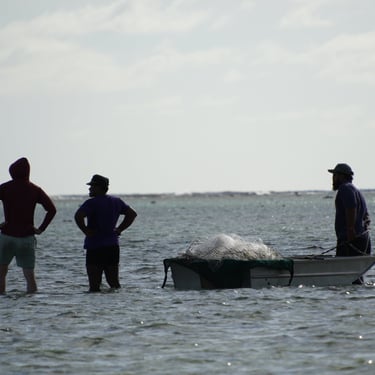
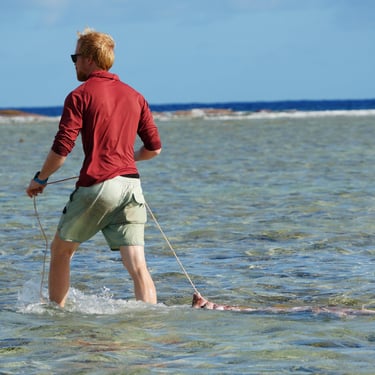
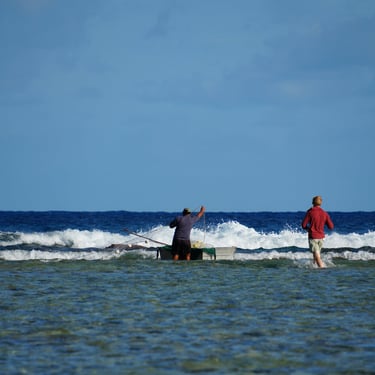
Or at least what we thought were fishing skills. They took us across the lagoon to the other side of the island, where they had prepared everything for the day’s fishing. They even brought us neoprene shoes. The pair they had for Alex actually fit perfectly, something I honestly didn’t expect considering his shoe size. Mine, on the other hand, looked more like clown shoes. But since I wasn’t planning on running any races through the water, they worked just fine. The plan sounded simple: A small dinghy would carry the fishing net. John would set the net in a wide half-circle, while Eddie and Alex would move through the shallow water, splashing and guiding the fish toward it. They also had a large stick to create extra movement and scare the fish in the right direction. Then, at the right moment, John would close the net around them. Simple. Except it wasn’t. The conditions were apparently not ideal that day. The tide wasn’t quite right, at least that’s what we were told. We wouldn’t have known any better. To us, it already felt incredible. There we were, standing calf-deep in the clear Pacific water with people who had lived here their entire lives, learning a fishing technique that had been passed down through generations. What an incredible experience. Fish started making their way into the net. Once caught, they were quickly collected, processed, and attached to a rope that was dragged behind the boat.
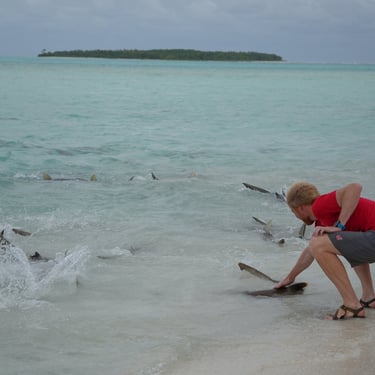
The goal for the day was around 300 fish. The reason? When the next container ship arrives, the fish can be exported, providing the community with some additional income. It is not a huge amount of money, but on a remote island like Palmerston, every bit helps. We spent around four hours out in the water. And Alex improved quickly. At the beginning, it was obvious he was the beginner. But with every attempt, he understood the signals better. Eddie and John shouted instructions, showing him where to move and how to guide the fish toward the net. Watching them work together was incredible. After the final catch, we helped clean the fish. And once again, we were amazed by how quickly professionals can work. We helped, but honestly, we probably didn’t save them much time. After loading the buckets full of fish into the dinghy, we headed back to shore. The fish were brought up from the beach in wheelbarrows and transported back to the house, where the next stage began: preparing the fillets. The process was almost like an assembly line. One person removed the meat from the bones. The next removed the skin. The next cleaned away the remaining bones and blood. The last wrapped the fillets and placed them into the freezer. Alex was added into the production line and did his best to keep up with their incredible speed. They worked until 4:30 p.m. Hours of hard physical work. And all the leftover pieces? Back into the ocean. Within minutes, the water came alive. Sharks appeared from everywhere. During this process, Palmerston can sometimes see more than a hundred sharks gathering around the boat. That day, we counted around 30. For a few minutes, the ocean was nothing but splashing fins and moving shadows. And then, almost as quickly as it started…silence again. A completely wild spectacle.

Saying Goodbye Too Soon
After this incredible day, Eddie brought us back to Tauha. The following day, we had planned to visit the school and personally deliver the supplies and donations we had brought. Unfortunately, the weather had other plans. The waves had increased, and the wind direction made the pass too dangerous to navigate. We were disappointed. We would have loved to meet the kids and deliver everything ourselves. But Palmerston reminded us once again that nature decides the schedule. Luckily, Eddie came out one more time and took our donations onto the island for us. We also left a small note for the kids. It wasn’t exactly how we imagined it, but the supplies made it where they needed to go. With the weather forecast showing no improvement and good conditions opening up for our next passage to Niue, we made the difficult decision to leave the next morning. Palmerston was everything we hoped for and more. A tiny island. A huge welcome. Amazing people. And an experience we will never forget. Thank you, Eddie, John, Juliana, and everyone on Palmerston for showing us what true island hospitality looks like. Fair winds and following seas. Until next time.
And if you want to find out more about Palmerstone and what life is on an island like Palmerstone, you can follow Eddie on Facebook. The Link to his Facebook is here: Facebook-Link.
If you’d like to read more, follow our journey, and support what we do, don’t forget to subscribe to our newsletter or follow us on social media. Every bit of encouragement helps keep the adventure going and we’d love to have you aboard!